
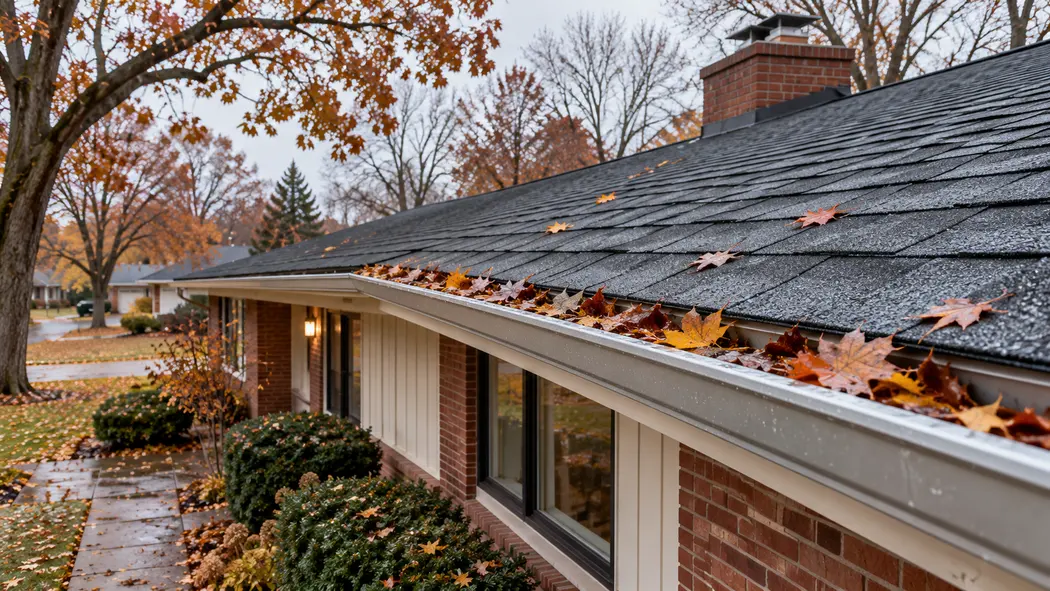
Clogged gutters in Bloomington MN are a common fall maintenance concern, especially for homes surrounded by mature maple, oak, and other deciduous trees. As leaves collect along roof edges and inside gutter channels, they can restrict drainage, contribute to water overflow, and conceal early signs of roofing wear.
For Bloomington homeowners, the transition from summer storms to falling leaves can create a combination of roofing and drainage concerns. Wind may leave branches or debris on the roof, while subsequent rainfall carries leaves and loosened shingle granules into the gutters.
A small amount of debris is not necessarily an emergency. However, repeated gutter overflow, standing water, loose gutter sections, and moisture stains deserve attention before Minnesota’s freezing temperatures arrive.
In this guide, Bold North Roofing & Contracting explains how leaves affect roof drainage, what warning signs homeowners should look for, and when to schedule a professional roof inspection in Bloomington, MN.
What Are the Warning Signs of Clogged Gutters in Bloomington MN?
Common warning signs include water overflowing during rainfall, leaves visibly filling the gutter channel, slow drainage from downspouts, sagging gutter sections, and stains on fascia boards or siding.
Bloomington homeowners should watch for:
- Wet leaves accumulating along roof edges
- Gutters overflowing during moderate or heavy rain
- Downspouts releasing little water despite rainfall
- Standing water remaining in gutters after a storm
- Dark shingle granules collecting with leaves
- Loose, sagging, or detached gutter sections
- Water stains beneath roof eaves
- Debris collecting in roof valleys
- Water pooling near the foundation
These signs can indicate drainage problems, but they do not automatically mean the roof needs replacement. Many concerns can be addressed through cleaning, adjustments, or localized repairs.
Why Falling Leaves Create Roofing Concerns in Bloomington, Minnesota
Bloomington neighborhoods include residential properties with established trees and varying roof designs. Homes with mature maples, oaks, or other trees near the roof may collect leaves throughout the fall season.
Wind and rain can move leaves from the roof surface into gutters, downspouts, and roof valleys.
When debris accumulates, it can slow water movement and create drainage problems during subsequent rainfall.
Why Leaf Buildup Matters
Restricted drainage: Debris may prevent water from moving freely toward downspouts.
Overflow: Water may spill over gutter edges and contact exterior materials.
Extra weight: Saturated leaves and standing water place additional weight on gutter components.
Concealed wear: Debris can cover damaged shingles, flashing, or roof valleys.
Cold-weather concerns: Standing water inside gutters can freeze as temperatures fall.
The University of Minnesota Climate Adaptation Partnership’s homeowner checklists recommend maintaining gutters and positioning downspouts so water flows away from the home’s foundation.
Fall maintenance helps homeowners address these concerns before colder weather limits outdoor access.
01 How Falling Leaves Block Gutters and Downspouts
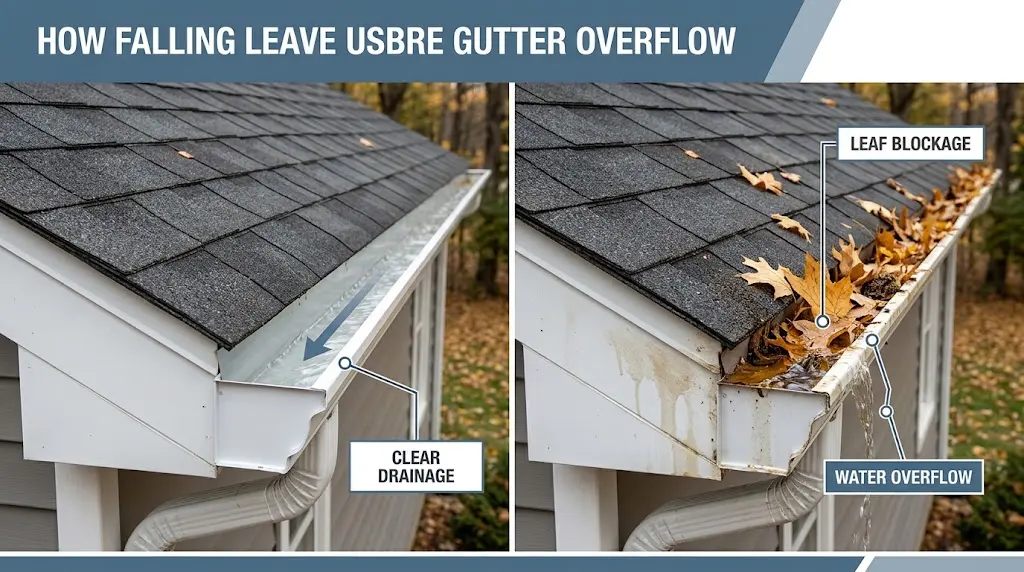
A residential gutter system collects rainwater along the roof edge and directs it toward downspouts.
When the system is clear and correctly installed, water should move through the gutters and discharge away from the building.
However, falling leaves can interrupt this process.
How a Gutter Blockage Develops
Stage 1: Leaves collect. Wind carries dry leaves and small branches onto the roof and into gutters.
Stage 2: Debris becomes wet. Rain saturates the leaves, causing them to settle and form compact layers.
Stage 3: Water flow slows. Debris restricts the gutter channel or downspout opening.
Stage 4: Water overflows. Rainwater spills over the gutter edge or remains inside the channel.
Repeated overflow may expose fascia boards, soffits, siding, and other exterior materials to unwanted moisture.
Bloomington homeowners should observe gutter performance during rainfall from a safe location. A gutter that regularly overflows may need cleaning, repair, or drainage adjustments.
02 Watch for Water Overflow Along the Roof Edge
Water spilling over gutters is one of the most visible signs that something may be wrong with the drainage system.
Although very intense rainfall can sometimes exceed a gutter’s capacity, recurring overflow during ordinary rain often deserves closer attention.
What Gutter Overflow May Indicate
Leaves or debris blocking the gutter channel
A clogged downspout
Incorrect gutter slope
Loose or damaged gutter attachments
A drainage system that needs adjustment
Why Repeated Overflow Is a Concern
When water repeatedly spills over the gutter edge, it may contact fascia boards and soffits or run down exterior siding.
Depending on the property’s drainage conditions, water may also collect near the foundation.
Over time, persistent moisture exposure can contribute to staining or deterioration of vulnerable materials.
Homeowners should investigate repeated overflow rather than assuming it is a normal part of fall rainfall.
03 Check for Sagging or Loose Gutters
Gutters are designed to carry water, but accumulated wet leaves and standing water add unnecessary weight.
Older gutter systems or those with weakened fasteners may begin to sag or pull away from the fascia.
Signs of Gutter Attachment Problems
Uneven or sagging gutter sections
Visible gaps between the gutter and fascia
Loose fasteners or hangers
Gutters leaning outward
Standing water collecting in low sections
Water spilling from unintended locations
Cleaning alone may not correct these issues if the gutter has lost its proper slope or secure attachment.
Gutters that appear structurally loose should be evaluated before freezing temperatures add further complications.
04 Look for Shingle Granules Mixed With Fall Leaves
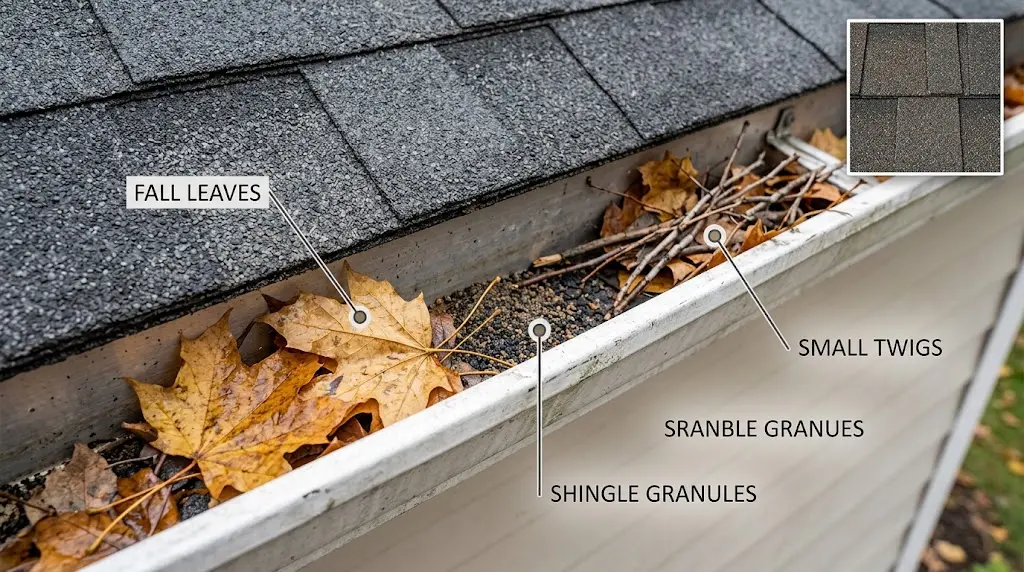
During gutter cleaning, homeowners may notice dark, sand-like material mixed with leaves and twigs.
Some of this material may be protective granules shed from asphalt shingles.
Granules help protect asphalt shingles from weather exposure. Small amounts of shedding can occur naturally, especially with newer shingles or as roofs age.
However, unusually heavy or localized granule loss may deserve closer evaluation.
What to Look For
Heavy deposits of dark granules inside gutters
Granules accumulating near downspout outlets
Uneven shingle coloration
Visible patches of missing protective granules
Granule loss accompanied by cracked or lifted shingles
Does Granule Loss Mean You Need a New Roof?
Not necessarily.
Granule shedding can result from normal weathering, manufacturing-related initial shedding, aging, or possible storm damage.
The amount and distribution of granule loss should be evaluated alongside the roof’s age, visible shingle condition, and history of leaks or storm exposure.
If you suspect roofing damage, learn more about storm damage warning signs for Minnesota homeowners.
05 Inspect Roof Valleys Where Leaves Collect
Roof valleys form where two sloping roof sections meet. These areas channel water toward the gutters and can carry substantial runoff during rainfall.
Because valleys create a natural collection point, fallen leaves and small branches may accumulate there.
Common Roof Valley Warning Signs
Leaves packed against shingles
Twigs lodged in the valley
Visible debris covering valley flashing
Moisture staining near roof intersections
Recurring leaks after rainfall
Heavy debris buildup can slow drainage and retain moisture near roofing materials.
However, a few scattered leaves do not automatically indicate roof damage. The concern is persistent accumulation that interferes with water flow or hides existing weaknesses.
If valley debris is difficult to reach safely, arrange professional assistance instead of climbing onto the roof.
06 Check Fascia Boards, Soffits, and Exterior Siding for Moisture
Gutter problems sometimes become noticeable on nearby building materials before homeowners identify the blockage itself.
When water repeatedly overflows or escapes through damaged gutter connections, it may reach fascia boards, soffits, and siding.
Visible Warning Signs
Dark staining below the gutter line
Peeling paint on fascia boards
Soft or deteriorating wood
Moisture marks on soffit panels
Repeated water trails down exterior siding
Unusual moisture near roof-edge connections
These signs do not always originate from clogged gutters. Flashing defects, roof leaks, condensation, and other moisture sources may create similar symptoms.
Identifying the actual source matters because correcting the gutter blockage alone may not resolve an unrelated roofing problem.
07 Can Clogged Gutters Cause Ice Dams in Minnesota?
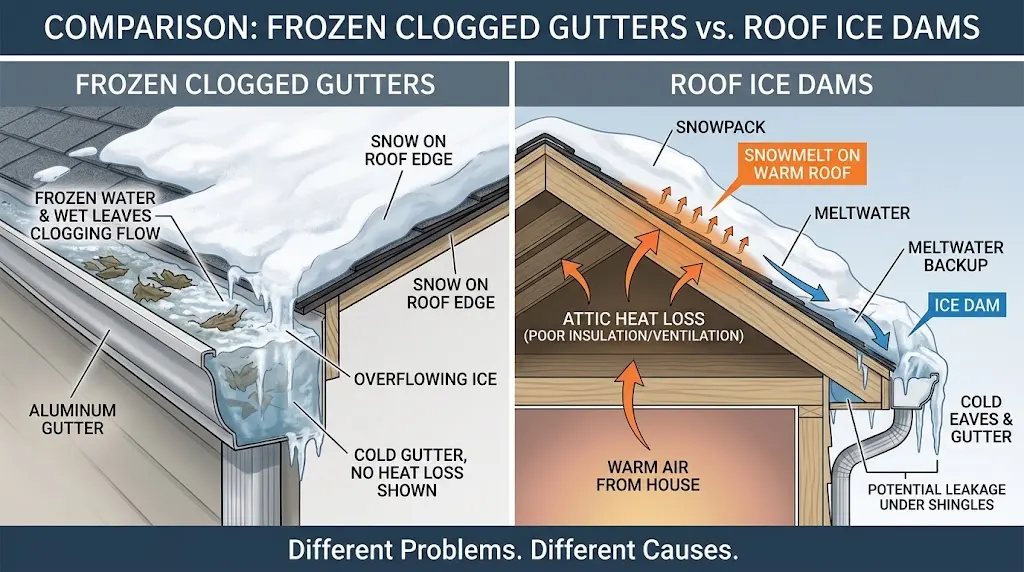
Homeowners often associate clogged gutters with ice dams. Although both involve water and roof edges, they are not the same problem.
Clogged gutters do not directly cause the roof temperature differences responsible for most ice dams.
Ice dams form when snow melts on warmer portions of the roof and refreezes near colder eaves. Heat escaping from the home, snow cover, and outdoor temperatures are major contributing factors.
The University of Minnesota Extension’s ice dam prevention guide explains the role of uneven roof temperatures and attic heat loss in ice dam formation.
What Happens When Clogged Gutters Freeze?
Water trapped inside a clogged gutter can freeze when temperatures drop.
This may increase the weight placed on loose or aging gutter sections and interfere with drainage when temperatures rise again.
However, gutter cleaning alone is not a reliable solution for preventing roof ice dams.
What Actually Helps Reduce Ice Dam Risk?
Long-term prevention generally involves reducing unwanted heat transfer from the home into the attic and roof assembly.
Depending on the property, this may include:
Sealing air leaks between living spaces and the attic
Improving attic insulation where needed
Evaluating roof and attic conditions
Addressing existing moisture problems
Consulting a qualified home energy professional
The Minnesota Department of Commerce provides additional information about how attic heat loss contributes to ice dams.
For Bloomington homeowners, keeping gutters clear and addressing attic heat loss are both worthwhile maintenance steps, but they solve different problems.
08 How Often Should Bloomington Homeowners Clean Their Gutters?
There is no single gutter cleaning schedule that applies to every home.
The right frequency depends on tree coverage, the type of debris falling near the roof, gutter design, and how quickly blockages develop.
Homes With Limited Tree Coverage
Cleaning in spring and fall may be an appropriate starting point when debris accumulation is relatively light.
Homes Surrounded by Mature Trees
Additional checks may be needed during peak leaf drop, particularly after windy weather or heavy rain.
Homes With Recurring Drainage Problems
Gutters should be evaluated whenever recurring overflow, standing water, or loose sections become noticeable.
Bold North Roofing discusses cleaning frequency and maintenance considerations in its guide, How to Clean Your Gutters This Fall.
The goal is not to follow a rigid calendar. It is to keep the drainage system functioning as conditions change.
09 Are Gutter Guards Worth Considering?
Gutter guards may help reduce the amount of leaves and debris entering certain gutter systems.
However, they do not eliminate maintenance completely.
Leaves, pine needles, seed pods, and other material may still collect on top of guards or enter through openings.
Questions to Ask Before Installing Gutter Guards
What types of leaves and debris collect around the property?
Is the existing gutter system properly sloped?
Are downspouts draining correctly?
Will the selected guard system be compatible with the roof and gutters?
How will the system be inspected and maintained?
Homeowners should consider the specific drainage conditions of their property rather than assuming gutter guards will eliminate every blockage.
10 A Safe Fall Gutter Inspection Checklist for Bloomington Homeowners
Homeowners can identify many common gutter problems from the ground or other safe viewing locations.
Gutters and Downspouts
Look for leaves extending above gutter edges.
Observe whether gutters overflow during rainfall.
Check for visibly loose sections.
Watch for downspouts that release little water.
Look for water collecting near the foundation.
Roof Edges and Valleys
Check for visible debris buildup.
Look for damaged shingles near the eaves.
Watch for dark staining around fascia boards.
Observe accessible roof valleys for trapped leaves.
Interior Warning Signs
Look for ceiling stains near exterior walls.
Check accessible attic spaces for damp insulation.
Notice musty odors following rainfall.
Document recurring moisture concerns.
Safety reminder: Do not walk on steep, wet, frosted, or damaged roofs. Avoid unstable ladders and never work near overhead electrical lines. Professional gutter cleaning is recommended when access is difficult or hazardous.
11 When Do Gutter Problems Require a Professional Roof Inspection?
Not every gutter blockage requires a roofing contractor. Routine leaf buildup may only need cleaning.
However, some warning signs may indicate problems involving the roof edge, flashing, fascia, or other roofing components.
Consider a Professional Inspection If:
Gutters repeatedly overflow despite cleaning.
Roof-edge materials show visible deterioration.
Shingles appear missing or damaged.
There is significant granule accumulation.
Water stains develop on ceilings or attic framing.
Gutter attachments are pulling away from the house.
There is suspected wind or hail damage.
Leaks continue after drainage problems are corrected.
A professional evaluation can help determine whether the issue involves routine drainage maintenance, gutter repairs, roofing repairs, or other building components.
Bold North Roofing & Contracting provides roof inspection services in Minnesota, including exterior evaluations of shingles, flashing, gutters, vents, and drainage systems.
12 Roof Repair or Replacement: What If Damage Is Found?
Finding roof wear during fall does not mean the entire roofing system needs replacement.
When Localized Repairs May Be Appropriate
A small section of shingles is damaged.
Flashing has a localized problem.
A gutter attachment needs repair.
A pipe boot or roof vent seal is deteriorating.
The remaining roof is in good condition.
When Replacement May Be Worth Considering
Shingles show widespread deterioration.
Several roof sections have significant damage.
Leaks continue despite appropriate repairs.
The roof is near the end of its expected service life.
Underlying roofing materials need extensive replacement.
The appropriate recommendation depends on the property’s condition, not simply the presence of leaves or debris.
Homeowners can learn more about roof repair and replacement services in Bloomington, MN through Bold North Roofing.
Fall Gutter and Roofing Concerns in Bloomington and Nearby Twin Cities Communities
These maintenance tips are relevant to homeowners throughout Bloomington and nearby Twin Cities communities, including:
Bloomington, MN
Richfield, MN
Edina, MN
Burnsville, MN
Eagan, MN
Eden Prairie, MN
Minneapolis, MN
Apple Valley, MN
Minnetonka, MN
St. Louis Park, MN
Some homes have extensive tree coverage, while others experience more open exposure to wind and seasonal storms.
Gutter maintenance needs depend on roof design, surrounding trees, gutter condition, roof age, and previous weather exposure.
For homeowners planning broader seasonal maintenance, Bold North Roofing also has a separate guide on preparing a Bloomington roof for Minnesota snow.
The Neighborhood Roof Signal Framework
When a neighbor replaces their roof, it doesn’t automatically mean your home needs a new one. However, nearby roof replacements can be a useful reminder to evaluate your own roof, especially after hailstorms, strong winds, or severe weather.
Here’s a simple four-step framework to help homeowners make informed roofing decisions:
Notice:
Pay Attention to Nearby Roof Work
Notice when several homes in your neighborhood receive roof repairs or replacements, particularly after major storms. This may indicate shared exposure to damaging weather conditions.
Compare:
Evaluate Your Roof’s Risk Factors
Compare your roof’s age, materials, condition, tree coverage, and exposure to recent storms. Neighboring homes may experience the same weather but have different roofing needs.
Check:
Look for Visible Warning Signs
Check for missing or lifted shingles, excessive granule loss, dented gutters, and signs of moisture. A ground-level inspection can help identify potential roofing concerns.
Decide:
Schedule a Professional Roof Inspection
If you notice damage or share similar risk factors with nearby homes, consider a professional inspection. A roofing expert can determine whether maintenance, repairs, or replacement may be necessary.
Key Takeaway: A neighbor’s roof replacement is a reason to pay attention, not proof that your roof needs replacing. Evaluate your home’s condition before making a roofing decision.
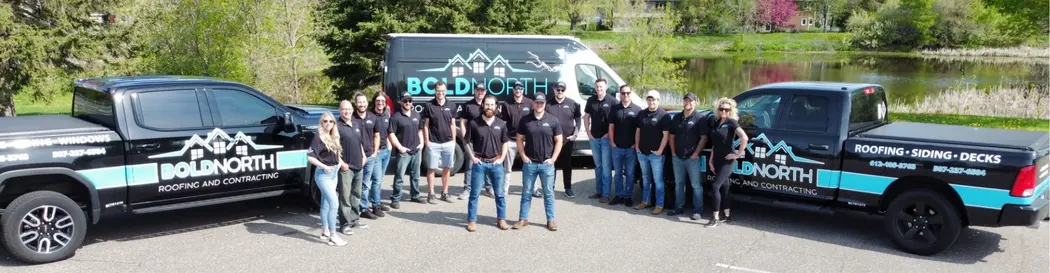
Bold North Roofing: A Local Inspection Can Give You a Clear Answer
At Bold North Roofing, the goal is to help homeowners understand what their roof actually needs. If your neighbor just replaced their roof, that does not mean you automatically need one too. But it may mean your home is worth checking, especially if it shares the same storm history, roof age, or neighborhood conditions.
A roof inspection can help identify whether your roof has storm damage, aging shingles, flashing concerns, gutter issues, attic moisture, or other warning signs. Homeowners can also meet the team or review financing options if larger roof work becomes part of the conversation.
The most important thing is getting a clear answer before assuming the worst. A roof may only need maintenance or a small repair. In other cases, replacement planning may make sense. The inspection helps separate guesswork from actual roof condition.
Frequently Asked Questions About Clogged Gutters in Bloomington MN
- What are the signs of clogged gutters in Bloomington MN?
Common signs include visible leaf buildup, overflowing water during rain, slow drainage from downspouts, standing water, sagging gutter sections, and staining on fascia boards or siding.
- Can falling leaves damage asphalt shingles?
A few leaves generally do not damage asphalt shingles. However, heavy debris buildup in roof valleys or near drainage areas may hold moisture, slow water movement, and conceal existing roofing problems.
- How often should gutters be cleaned in Bloomington?
Many homes benefit from spring and fall cleaning. Properties surrounded by mature trees may require additional checks during peak leaf drop or after strong storms.
- Does gutter overflow mean the roof is leaking?
Not necessarily. Overflow may result from leaf blockages, clogged downspouts, incorrect slope, or damaged gutter components. A roof leak is a separate issue that may require inspection if water is entering the home.
- Do clogged gutters cause ice dams in Minnesota?
Clogged gutters can create drainage and frozen-water problems, but they are not the primary cause of ice dams. Ice dams generally develop when snow melts on warmer roof sections and refreezes near colder eaves.
- Are gutter guards maintenance-free?
No. Gutter guards may reduce some debris accumulation, but they still require periodic inspection and cleaning depending on the type of system and surrounding trees.
- When should Bloomington homeowners schedule a roof inspection?
Consider an inspection if you notice damaged shingles, recurring gutter overflow, roof-edge staining, attic moisture, interior leaks, or possible storm damage.
Conclusion: Keep Your Bloomington Roof and Gutters Clear This Fall
Clogged gutters in Bloomington MN can interfere with drainage, contribute to water overflow, and make existing roofing concerns harder to recognize.
As leaves accumulate during fall, homeowners should monitor gutters, downspouts, roof valleys, shingles, and nearby exterior materials for warning signs.
Keeping drainage systems clear is an important part of preparing for Minnesota winter, although gutter maintenance alone cannot prevent every roof problem or ice dam.
Some issues may be resolved through cleaning or localized repairs, while recurring leaks or widespread deterioration may require a more detailed professional evaluation.
Concerned about your Bloomington roof before winter? Explore Bold North Roofing’s Bloomington roofing services or contact the team to discuss scheduling a roof inspection.