
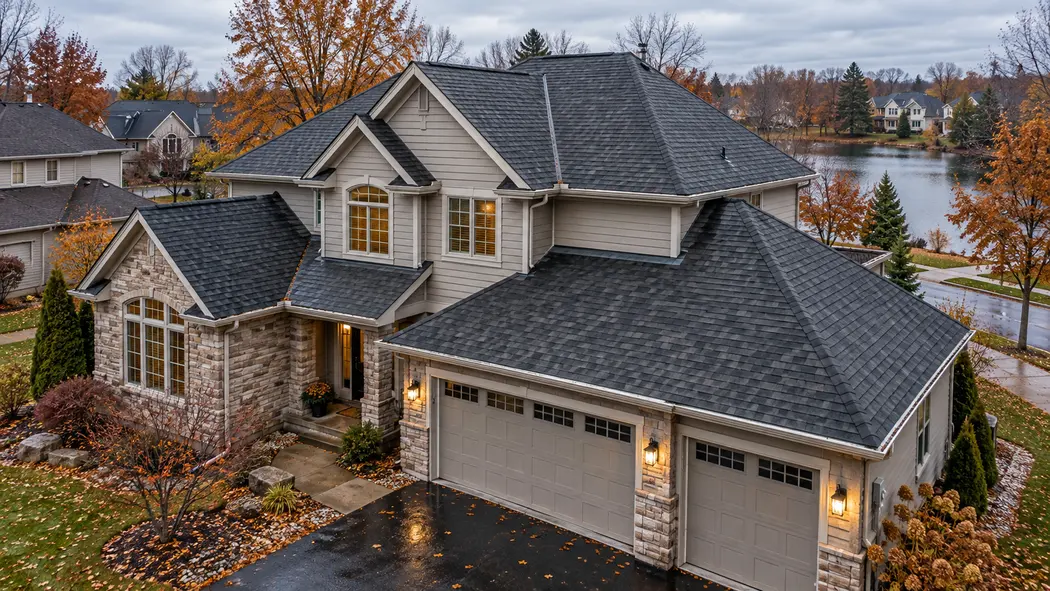
Eden Prairie summer storm roof damage can remain unnoticed long after the thunderstorms, hail, and strong winds have passed. A roof may look normal from the driveway, but lifted shingles, damaged flashing, and other storm-related weaknesses can leave areas vulnerable to moisture when colder Minnesota weather arrives.
Summer storms and winter conditions affect roofs differently. Hail may damage protective roofing materials, wind can loosen shingles, and falling debris may affect vents or gutters. Later, rain, snowmelt, and freezing temperatures can expose weaknesses that were never repaired.
This does not mean every roof that experienced a summer storm will develop winter problems. Many roofing systems continue performing normally after severe weather.
The concern is existing storm damage that remains undetected or unresolved.
For homeowners in Eden Prairie, fall is an opportunity to evaluate the roof before snow and ice make exterior inspections more challenging.
In this guide, Bold North Roofing & Contracting explains how previous summer storms may affect roofing performance, what warning signs deserve attention, and when to consider a professional roof inspection in Minnesota.
Can Summer Storm Damage Cause Roof Problems During Winter?
Yes. Summer storm damage may contribute to winter roofing problems when hail, wind, or debris has already weakened shingles, flashing, vents, or other protective components.
Winter conditions do not automatically cause those materials to fail, but snowmelt, precipitation, and repeated moisture exposure may reveal existing defects.
Potential concerns include:
Wind-lifted or missing shingles
Hail-damaged asphalt shingles
Loose chimney or roof-to-wall flashing
Damaged plumbing vent boots
Debris lodged in roof valleys
Cracked or displaced roofing accessories
Hidden moisture near roof penetrations
Previously unnoticed ceiling stains
Unresolved damage around gutters and roof edges
The appropriate response depends on the extent of damage and the condition of the surrounding roof.
A professional inspection can help distinguish cosmetic marks, ordinary wear, and roofing damage that requires attention.
Why Eden Prairie Homeowners Should Revisit Summer Storms Before Winter
Eden Prairie homes may experience strong thunderstorms, hail, heavy rain, and wind during the warmer months.
These events can affect roof surfaces even when homeowners do not notice an immediate leak.
The National Weather Service’s severe thunderstorm safety guidance identifies damaging wind and large hail as important hazards associated with severe thunderstorms.
What Happens When Storm Damage Is Overlooked?
Imagine a summer windstorm lifting several shingles along a roof edge.
The shingles may settle back into place after the storm, making the problem difficult to notice from the ground.
However, weakened seals or damaged roofing components may leave portions of the roof more vulnerable to additional wind and precipitation.
Similarly, a damaged pipe boot or flashing connection may not produce an obvious leak during every rainfall.
As weather conditions change, moisture may eventually reach vulnerable materials.
Why Fall Is a Useful Time to Investigate
During fall:
The roof is generally more visible before snowfall.
Homeowners may recognize moisture stains after seasonal rainfall.
Leaves and debris can be removed from drainage areas.
Damaged flashing and roof accessories can be evaluated.
Repairs may be easier to plan before icy conditions limit access.
The goal is to identify actual roofing problems, not assume that storm exposure always means damage.
01Hail Damage May Be Difficult to Recognize From the Ground
Hail can affect different roofing materials in different ways.
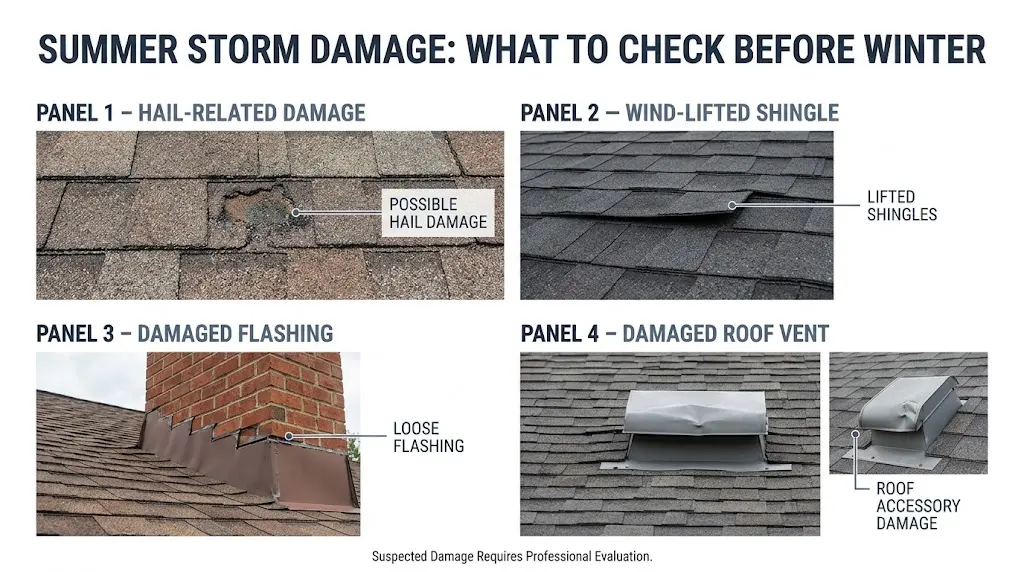
On asphalt shingles, impact-related damage may involve displaced granules, fractured shingle mats, or other changes depending on hail size, impact conditions, and material characteristics.
However, not every mark on a shingle is hail damage.
Aging, manufacturing variations, debris abrasion, and ordinary weathering may create appearances that require closer evaluation.
What Should Eden Prairie Homeowners Look For?
Possible warning signs include:
Concentrated shingle damage
A professional may identify impact-related deterioration or fractures on affected shingles.
Damaged metal accessories
Dents on roof vents or soft-metal components may indicate hail exposure, although they do not prove that shingles were damaged.
Displaced roofing granules
Unusual granule loss may deserve evaluation, particularly when associated with other storm-related signs.
Damaged roof accessories
Skylights, vent covers, flashing, or other components may also be affected by hail.
Can Hail Damage Cause a Leak Months Later?
Potentially, depending on whether the impact compromised the roofing system.
A damaged shingle or accessory may remain exposed to rain, temperature changes, and other weather conditions after the original storm.
However, hail exposure does not guarantee that a leak will develop.
If your Eden Prairie home experienced a significant hailstorm, the best approach is to have any suspected damage evaluated rather than relying only on visible marks.
For more information, review Bold North Roofing’s Minnesota storm damage guide.
02Wind-Lifted Shingles Can Remain Vulnerable After Summer
Strong winds can place upward forces on shingles, particularly around roof edges, ridges, and other exposed locations.
If shingle adhesive bonds or fasteners are compromised, materials may lift or become displaced.
Common Signs of Wind-Related Roofing Damage
Missing shingle tabs
Lifted or unsealed shingles
Torn shingle edges
Loose ridge or hip shingles
Damaged starter shingles
Exposed underlayment
Roofing debris found in the yard
Why Can This Matter During Winter?
An already weakened shingle may be less resistant to additional wind-driven precipitation.
If snow melts and water reaches an exposed or improperly protected section of the roof, moisture may enter underlying materials.
Repeated wetting can affect vulnerable wood, insulation, and interior finishes.
Cold temperatures alone do not automatically create leaks in sound roofing systems. The primary concern is whether previous wind damage left a defect in the roof’s protective layers.
03Summer Storms Can Affect Flashing and Roof Penetrations
Shingles receive most of the attention after severe weather, but roof flashing and penetration details are equally important.
Flashing directs water away from vulnerable connections around chimneys, skylights, walls, and other roof features.
Roof penetrations include plumbing pipes, exhaust vents, and other components that pass through the roof assembly.
Storm-Related Weaknesses Worth Checking
Chimney flashing
Wind or debris impacts may affect already loose metal or deteriorated masonry connections.
Roof-to-wall flashing
Improperly protected or damaged intersections may allow water to enter adjacent materials.
Plumbing vent boots
Aging rubber boots or damaged flashing may develop openings around vent pipes.
Skylight connections
Water staining near skylights may indicate flashing, condensation, or other building-envelope concerns.
Roof valleys
Debris accumulation can hide existing damage and interfere with normal drainage.
Why These Areas Matter After Summer Storms
Even a roof with relatively healthy shingles can develop leaks around deteriorated flashing or roof penetrations.
During winter, melting snow follows the roof slope toward these connections.
If the connections are already compromised, repeated moisture exposure may create additional problems.
Professional evaluation can help distinguish a localized flashing defect from broader roofing damage.
04How Small Summer Roofing Problems Can Become Winter Moisture Problems
Not every storm-damaged roof becomes worse during winter.
However, a roof with an existing opening may continue experiencing water exposure as weather conditions change.
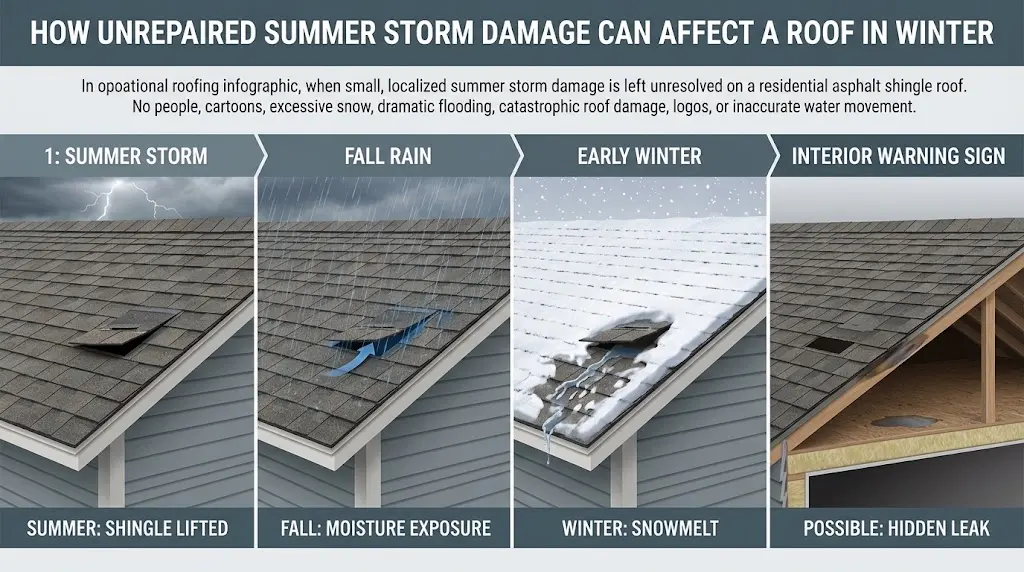
The Seasonal Progression
Summer: Initial damage occurs
A storm may lift shingles, affect flashing, or damage a roof accessory.
Early fall: The problem remains unnoticed
Rainfall may enter a small opening without creating immediate visible interior symptoms.
Late fall: Moisture becomes more noticeable
Staining or damp materials may appear as the affected area experiences additional rainfall.
Winter: Snow and ice complicate the situation
Snowmelt may expose the same defect to water, while frozen surfaces make inspection and repairs more difficult.
The important distinction is that this progression is possible, not inevitable.
Properly functioning roofing systems are designed to handle seasonal weather changes.
05 Why Ice Dams and Summer Storm Damage Are Different Problems
Winter ice dams are often discussed alongside storm damage, but they have different underlying causes.
An ice dam forms when snow melts on warmer portions of a roof and refreezes near colder eaves.
The accumulated ice can prevent additional meltwater from draining normally.
The University of Minnesota Extension explains that uneven roof temperatures, heat loss, outdoor conditions, and snow cover contribute to ice dam formation.
Does Summer Hail Damage Cause Ice Dams?
No. Hail damage is not the primary mechanism that creates ice dams.
However, if an ice dam causes water to collect behind it, existing roofing defects may provide possible entry points.
That means an unrepaired storm-related opening can be an additional vulnerability during ice dam conditions.
What Can Help Reduce Ice Dam Risk?
Long-term prevention may involve:
Sealing air leaks between living areas and the attic
Improving insulation where needed
Reviewing attic and roof assembly design
Addressing recurring heat-loss concerns
Maintaining functional gutters and drainage
Gutter cleaning helps water drain properly but does not eliminate the temperature differences responsible for ice dam formation.
Homeowners can learn more from Bold North Roofing’s Ice Dam Prevention Guide for Minnesota Homes.
06Warning Signs That Summer Storm Damage May Still Be Affecting Your Roof
Some roofing concerns can be noticed without walking on the roof.
Eden Prairie homeowners should look for both exterior and interior signs.
Exterior Warning Signs
Shingles missing from a roof slope
Raised or irregular shingle edges
Roofing fragments in the yard
Loose ridge shingles
Damaged roof vents
Visible flashing separation
Storm debris in roof valleys
Gutters or downspouts displaced by wind or debris
Interior Warning Signs
Ceiling stains after rainfall
Damp attic insulation
Water marks near chimneys
Discoloration on attic framing
Peeling paint
Recurring moisture near skylights
Not every sign has the same cause.
Ceiling stains may result from roofing problems, plumbing, or attic condensation.
For this reason, the source should be identified before repairs are recommended.
When Should You Seek Prompt Help?
Active water entry, visibly deforming ceilings, or suspected structural instability requires more urgent attention than ordinary roofing wear.
Keep people away from unsafe areas and contact qualified professionals.
Avoid climbing onto the roof, especially when surfaces are wet, frosted, or icy.
07 What About Gutters and Downspouts After Summer Storms?
Summer windstorms can leave twigs, leaves, and branches on roof surfaces or inside drainage systems.
Fall leaves can add to that accumulation.
When gutters become blocked, rainwater may overflow instead of moving through the downspouts.
Gutter Warning Signs
Debris filling gutter channels
Water spilling over the edges during rainfall
Downspouts draining slowly
Sagging gutter sections
Detached gutter brackets
Water staining on fascia boards
Standing water after rainfall
Blocked drainage can become more complicated when remaining water freezes.
However, gutter problems should be assessed separately from roof ice dams.
Clearing gutters is useful seasonal maintenance, but it does not substitute for repairing missing shingles or damaged flashing.
If gutters are elevated, unstable, or difficult to reach safely, hire an appropriate professional.
08 What Should Eden Prairie Homeowners Do If They Suspect Storm Damage?
If your property experienced a summer storm and you have noticed roofing concerns, begin by documenting the available evidence.
Step 1: Review What Happened During the Storm
Consider whether the home experienced hail, strong winds, heavy rain, or falling debris.
You do not need to prove the severity of a storm yourself to request a roofing evaluation.
Step 2: Look for Observable Warning Signs
Check the roof from the ground for missing shingles or damaged accessories.
Look for new stains inside the home or attic.
Avoid walking on the roof.
Step 3: Document the Condition
Photograph visible damage and record when it was first noticed.
Save photographs, previous repair documentation, and any relevant inspection reports.
Step 4: Schedule an Inspection
A qualified roofing contractor can evaluate areas that cannot be assessed reliably from the driveway.
Bold North Roofing provides hail and storm damage assessment services throughout the Twin Cities area.
Step 5: Review the Recommended Solution
The inspection should help explain:
What damage was identified
Whether the damage appears localized or widespread
Whether an active water-entry problem exists
Which repairs may be appropriate
Whether replacement warrants consideration
The goal is to make decisions based on the roof’s condition rather than pressure to begin a major project.
09 Should You File an Insurance Claim for Summer Storm Damage?
A roofing inspection and an insurance claim are not the same thing.
A professional inspection helps document the roof’s condition and identify possible storm-related damage.
An insurance claim asks the insurer to evaluate damage under the terms of the homeowner’s policy.
Before Filing a Claim
Consider:
Reviewing the insurance policy and deductible
Checking applicable reporting requirements
Documenting the date or approximate timing of the storm
Collecting relevant photographs and inspection findings
Contacting the insurer with questions about coverage
Coverage is not automatic. It depends on the policy, cause of damage, documentation, and the insurer’s determination.
If storm-related damage has remained unnoticed since summer, avoid assuming that winter automatically changes or extends any insurance deadlines.
Bold North Roofing explains the process in its Roof Insurance Claim Guide for Homeowners.
Homeowners should confirm policy requirements directly with their insurer before making coverage decisions.
10 Summer Storm Roof Damage: Repair or Replacement Before Winter?
Finding storm damage does not automatically mean the entire roof must be replaced.
The right solution depends on the roofing materials, age, damage severity, and condition of the surrounding areas.
When Roof Repair May Be Appropriate
A limited number of shingles are damaged.
One plumbing vent boot needs replacement.
A localized flashing issue has been identified.
Damage affects a small area.
The remaining roof is in good condition.
When Roof Replacement May Be Worth Considering
Damage affects multiple roof slopes.
Shingle deterioration is widespread.
Previous repairs have repeatedly failed.
Several areas have active water-entry problems.
The roof is near the end of its useful service life.
Homeowners can learn more from Bold North Roofing’s Roof Repair or Roof Replacement Guide.
Does Every Storm-Damaged Roof Need Immediate Replacement?
No.
A sound roof with limited damage may need only appropriate repairs.
However, confirmed openings that allow water into the structure should be addressed promptly rather than left exposed through winter.
A professional recommendation should distinguish necessary work from optional improvements.
11 A Fall Checklist for Eden Prairie Homes After Summer Storms
Before winter, homeowners can use this checklist to review possible unresolved storm damage.
Exterior Roof Conditions
Look for missing shingles from the ground.
Note raised or uneven shingle edges.
Check visible roof vents and accessories.
Observe chimney and wall flashing.
Look for branches or debris in roof valleys.
Drainage and Roof Edges
Check gutters for leaves and twigs.
Look for damaged gutter attachments.
Confirm downspouts drain during rainfall.
Watch for water staining on fascia boards.
Interior and Attic Conditions
Check ceilings for new stains.
Look for moisture near chimney walls.
Inspect safely accessible attic areas for wet insulation.
Note recurring moisture following rainfall.
Document unexplained odors or discoloration.
Professional Follow-Up
Gather photographs of suspected damage.
Review previous roofing repairs.
Arrange an inspection when signs warrant it.
Ask for documented findings.
Discuss repair versus replacement only after evaluating the damage.
Safety Reminder: Never climb onto a wet, frosted, icy, or visibly damaged roof. Suspected structural damage and active leaks should be handled by appropriately qualified professionals.
Summer Storm and Winter Roofing Concerns Around Eden Prairie
Roofing conditions vary throughout Eden Prairie and surrounding Twin Cities communities.
A property with multiple gables and roof valleys may have different inspection needs than a home with a simple roof shape.
Likewise, a house surrounded by mature trees may experience more debris accumulation after high winds.
The same seasonal considerations can apply to homeowners in:
Eden Prairie, MN
Minnetonka, MN
Chanhassen, MN
Edina, MN
Bloomington, MN
Hopkins, MN
Shakopee, MN
Chaska, MN
St. Louis Park, MN
Savage, MN
However, exposure to the same storm does not mean neighboring properties experienced identical roofing damage.
Wind direction, tree cover, roofing materials, roof geometry, and existing conditions can all influence the outcome.
Bold North Roofing provides roofing services in Eden Prairie, Minnesota for homeowners evaluating repairs, replacements, and storm-related concerns.
The Neighborhood Roof Signal Framework
When a neighbor replaces their roof, it doesn’t automatically mean your home needs a new one. However, nearby roof replacements can be a useful reminder to evaluate your own roof, especially after hailstorms, strong winds, or severe weather.
Here’s a simple four-step framework to help homeowners make informed roofing decisions:
Notice:
Pay Attention to Nearby Roof Work
Notice when several homes in your neighborhood receive roof repairs or replacements, particularly after major storms. This may indicate shared exposure to damaging weather conditions.
Compare:
Evaluate Your Roof’s Risk Factors
Compare your roof’s age, materials, condition, tree coverage, and exposure to recent storms. Neighboring homes may experience the same weather but have different roofing needs.
Check:
Look for Visible Warning Signs
Check for missing or lifted shingles, excessive granule loss, dented gutters, and signs of moisture. A ground-level inspection can help identify potential roofing concerns.
Decide:
Schedule a Professional Roof Inspection
If you notice damage or share similar risk factors with nearby homes, consider a professional inspection. A roofing expert can determine whether maintenance, repairs, or replacement may be necessary.
Key Takeaway: A neighbor’s roof replacement is a reason to pay attention, not proof that your roof needs replacing. Evaluate your home’s condition before making a roofing decision.
Bold North Roofing: A Local Inspection Can Give You a Clear Answer
At Bold North Roofing, the goal is to help homeowners understand what their roof actually needs. If your neighbor just replaced their roof, that does not mean you automatically need one too. But it may mean your home is worth checking, especially if it shares the same storm history, roof age, or neighborhood conditions.
A roof inspection can help identify whether your roof has storm damage, aging shingles, flashing concerns, gutter issues, attic moisture, or other warning signs. Homeowners can also meet the team or review financing options if larger roof work becomes part of the conversation.
The most important thing is getting a clear answer before assuming the worst. A roof may only need maintenance or a small repair. In other cases, replacement planning may make sense. The inspection helps separate guesswork from actual roof condition.
Frequently Asked Questions About Eden Prairie Summer Storm Roof Damage
- Can summer storm damage cause roof leaks during winter?
Yes, if hail, wind, or debris created an opening or compromised a roofing component, moisture may enter during later rainfall or snowmelt. However, not every storm-exposed roof will develop a leak.
- What are the signs of hail damage on an asphalt shingle roof?
Possible signs include impact-related shingle damage, displaced granules, and damaged roofing accessories. Dented metal or granule loss alone does not definitively establish hail damage, so professional evaluation is useful.
- Can strong summer winds damage shingles without blowing them off?
Yes. Winds may lift or weaken shingle seals without completely removing the materials. Some damage can be difficult to identify from the ground.
- Does summer hail damage cause ice dams?
No. Ice dams primarily develop because of uneven roof temperatures and snowmelt refreezing near colder eaves. Existing storm-related roof openings may create additional moisture-entry risks when water backs up behind an ice dam.
- How can I check for storm damage before winter?
Observe your roof from the ground, look for missing or uneven shingles, check visible accessories and gutters, and document interior moisture concerns. Have suspected damage inspected by a qualified roofing professional.
- Should I file an insurance claim if I notice summer storm damage in fall?
Review your policy and contact your insurer about reporting requirements. Document the suspected damage and consider a professional roofing inspection. Coverage and deadlines depend on the specific policy.
- Can storm-damaged shingles be repaired without replacing the roof?
Often, yes. Localized damage may be repairable when surrounding materials remain in good condition. Widespread damage or extensive deterioration may justify evaluating replacement.
- When should Eden Prairie homeowners schedule a roof inspection?
An inspection is appropriate when you notice missing shingles, damaged flashing, recurring leaks, or suspected hail or wind damage. Fall can be a useful time because roofing conditions may be easier to evaluate before snow and ice accumulate.
- Does Bold North Roofing serve Eden Prairie, Minnesota?
Yes. Bold North Roofing & Contracting provides roofing services in Eden Prairie, including storm-damage assessments, roof repairs, and roof replacements. Visit the Eden Prairie roofing page to learn more.
Conclusion: Don’t Let Unresolved Summer Storm Damage Follow Your Roof Into Winter
Eden Prairie summer storm roof damage deserves attention when it has weakened roofing materials or created potential water-entry points.
Hail, wind, and flying debris can affect shingles, flashing, and roof accessories. Some problems may be difficult to recognize immediately, especially when the roof still appears normal from the driveway.
Winter weather does not guarantee that these issues will become more serious. However, snowmelt, precipitation, and restricted roof access can make existing weaknesses harder to manage.
For Eden Prairie homeowners, the most practical approach is to document suspected damage, identify actual roofing problems, and address confirmed defects before winter complicates the process.
Concerned that summer storms may have affected your Eden Prairie roof?
Explore Bold North Roofing & Contracting’s Eden Prairie roofing services, request a professional roof inspection, or contact the team to discuss your roofing concerns.