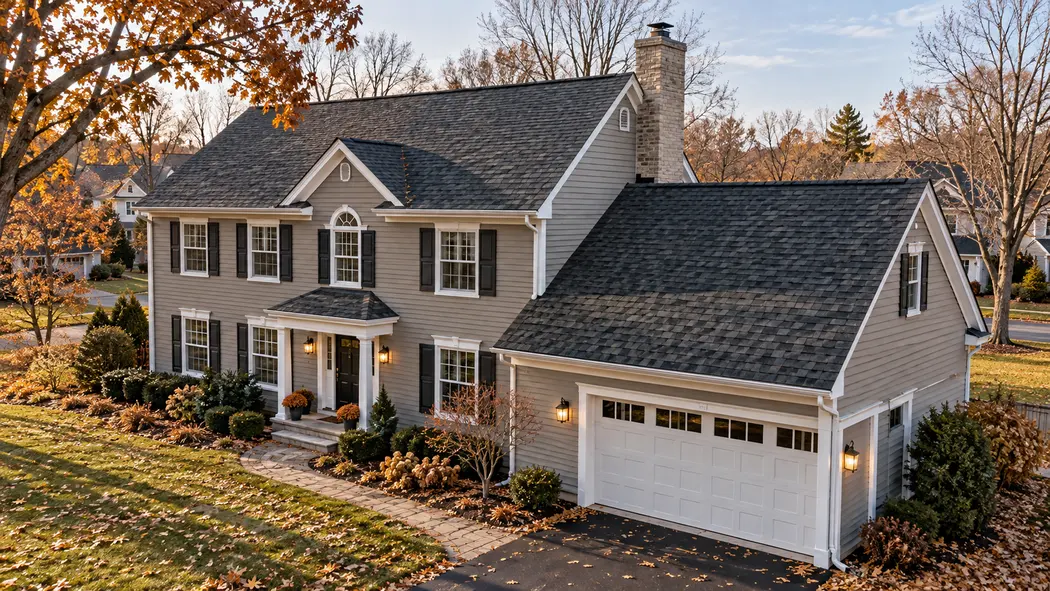
Knowing the Minnesota winter roof warning signs can help homeowners recognize problems before snow, ice, and freezing temperatures arrive. A roof may appear perfectly fine from the street, but lifted shingles, deteriorated flashing, hidden moisture, and other weaknesses can become more noticeable during winter weather.
Minnesota homeowners understand that winter brings more than cold temperatures. Snow accumulation, strong winds, freezing rain, and repeated melting and refreezing can challenge roofing systems, especially when materials are already worn or damaged.
However, not every roof needs repairs or replacement before winter. The goal is to understand your roof’s current condition, identify meaningful warning signs, and address problems before they become more difficult to manage.
This guide from Bold North Roofing & Contracting explains the most important signs to check this fall and how to determine whether maintenance, professional inspection, or roofing repairs may be appropriate.
What Are the Signs Your Minnesota Roof May Not Be Ready for Winter?
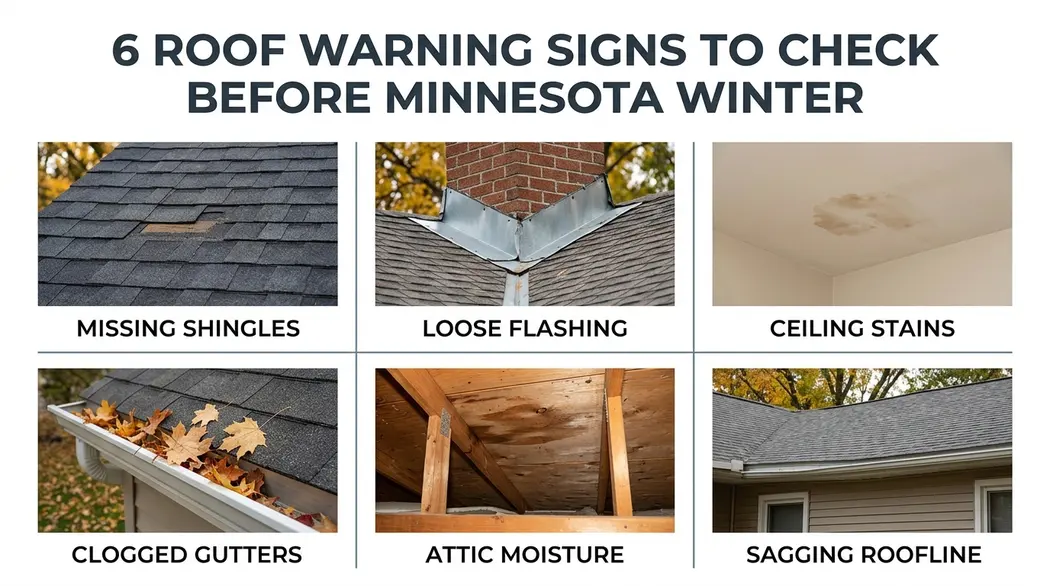
A roof may need attention before winter if it has missing or lifted shingles, deteriorating flashing, recurring leaks, drainage problems, attic moisture, or visible structural concerns.
Important warning signs include:
Missing, cracked, or curling asphalt shingles
Loose flashing around chimneys and roof openings
Brown stains on ceilings or attic framing
Damp insulation or recurring attic frost
Gutters clogged with leaves and debris
Previous ice dam problems
Sagging rooflines or unusual structural movement
Unresolved hail or wind damage
Repeated roof repairs or persistent leaks
Some of these signs indicate routine maintenance needs. Others may warrant prompt professional evaluation.
A roof’s readiness should be based on its actual condition rather than its age or appearance alone.
Why Checking Your Roof in Fall Matters in Minnesota
Fall provides an opportunity to identify roofing weaknesses before winter precipitation covers exposed materials.
During summer and early fall, roofs may experience thunderstorms, hail, heavy rainfall, strong wind, and prolonged sunlight. These conditions can affect asphalt shingles, flashing, ventilation components, and roof penetrations.
When winter arrives, snow and ice may conceal existing damage or make rooftop access more hazardous.
The National Weather Service’s winter weather preparedness guidance encourages homeowners to prepare their properties before severe winter conditions arrive.
What Makes Minnesota Winter Different?
Several conditions can affect residential roofs:
Snow accumulation: Snow adds weight to the roofing structure, particularly when it becomes wet or accumulates unevenly.
Freeze-thaw conditions: Meltwater may refreeze when temperatures drop, potentially worsening vulnerable areas where water is already entering.
Ice dams: Uneven roof temperatures can cause snowmelt to refreeze at colder eaves.
Winter winds: Strong winds can expose weakened shingles and roofing connections to additional stress.
Long periods of cold weather: Freezing conditions can make some repairs and roof access more challenging.
A seasonal inspection helps homeowners determine whether their roof has existing weaknesses that deserve attention before these conditions develop.
g.
01 Missing, Cracked, or Curling Shingles
Asphalt shingles form an important weather-resistant layer on many Minnesota residential roofs.
Although shingles are designed to withstand seasonal temperature changes, aging, previous storms, and ordinary weathering can affect their condition over time.
Shingle Warning Signs to Watch For
Missing shingles
A missing shingle may expose underlying protective materials to rain, wind, and melting snow.
Lifted shingle edges
Raised tabs or weakened adhesive seals can make parts of the roof more vulnerable to wind-driven precipitation.
Cracked shingles
Visible cracking may indicate weathering or deterioration, particularly on older roofs.
Curling shingles
Shingles with raised or curled edges may no longer lie securely against the roof surface.
Widespread granule loss
Excessive protective granule loss may indicate wear, although a small amount of granule shedding can be normal.
Does One Damaged Shingle Mean Your Roof Is Failing?
Not necessarily.
A limited area of damage may be repairable if the surrounding roof remains in good condition.
However, widespread wear across multiple roof slopes may indicate a need for a more detailed evaluation.
For homeowners who experienced recent storms, Bold North Roofing’s Minnesota storm damage guide explains what to watch for after hail and high winds.
02 Damaged Flashing Around Chimneys, Skylights, and Roof Vents
Roof flashing protects vulnerable intersections where the roof connects to chimneys, walls, skylights, and other building components.
These areas are important because they interrupt the continuous shingle surface and require properly installed water-shedding details.
Over time, flashing may loosen or deteriorate because of age, weather exposure, corrosion, or previous damage.
Common Flashing Warning Signs
Loose or raised metal flashing
Visible gaps around roof connections
Cracked or failing sealant
Rusted or deteriorating metal components
Water staining around chimney walls
Recurring leaks near skylights
Damaged rubber pipe boots
An otherwise healthy-looking shingle roof may still leak if one of these vulnerable connections is compromised.
If you notice interior stains near a chimney or skylight, the problem may involve flashing, masonry, condensation, or another building component.
A professional inspection can help identify the source before repair work begins.
03 Ceiling Stains and Signs of Hidden Roof Leaks
Not all roofing problems are visible from outside.
Water entering through damaged shingles, flashing, or roof penetrations can move along framing and other concealed materials before reaching a finished ceiling.
That means the location of a ceiling stain may not match the original point of water entry.
Interior Warning Signs
Yellow or brown ceiling stains
Bubbling or peeling paint
Damp drywall
Moisture marks around chimney walls
Musty odors near upper rooms
Recurring leaks during heavy rain or snowmelt
What Should You Do If You Notice a Water Stain?
First, document the stain and note whether it changes after precipitation.
Next, determine whether the moisture may be related to roofing, plumbing, ventilation, or condensation.
If water is actively entering the home, protect the affected interior area and arrange prompt professional assistance.
Avoid assuming that repainting the ceiling will solve the problem. The moisture source needs to be identified and corrected first.
04 Attic Moisture, Frost, and Insulation Problems
An attic can reveal important clues about winter roof performance.
Homeowners sometimes focus only on exterior shingles, but attic air leakage and moisture can influence winter conditions.
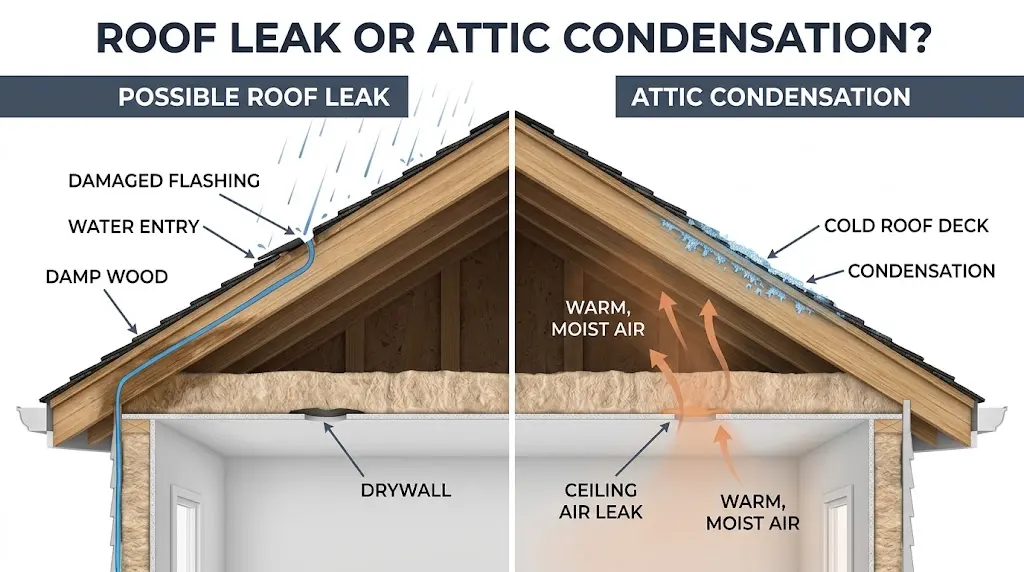
Warm, humid indoor air can travel through ceiling gaps into a cold attic. Under suitable conditions, moisture may condense or form frost on cold surfaces.
Attic Warning Signs
Frost developing repeatedly on roof decking
Damp or compressed insulation
Dark staining on attic framing
Rust on exposed metal fasteners
Persistent musty odors
Visible moisture around roof penetrations
Is Attic Frost Always a Roof Leak?
No.
Attic frost may result from indoor moisture reaching cold attic surfaces rather than water entering through damaged shingles.
A roof leak and attic condensation can create similar symptoms but may require different solutions.
Attic air sealing, appropriate insulation, and evaluation of ventilation conditions may help address some moisture problems.
The U.S. Department of Energy recommends combining air sealing and insulation improvements to reduce unwanted heat transfer and improve home energy performance.
Homeowners with recurring attic moisture should consider an assessment from an appropriately qualified roofing or home energy professional.
05 Clogged Gutters and Poor Roof Drainage
Minnesota homes surrounded by mature trees can accumulate substantial leaves and debris during fall.
When gutters and downspouts become blocked, rainwater may overflow or remain inside the system.
What Should Homeowners Look For?
Wet leaves filling gutter channels
Water spilling over gutter edges
Sagging or detached gutter sections
Blocked downspout openings
Standing water after rainfall
Water stains on fascia boards
Debris trapped inside roof valleys
If standing water remains in gutters as temperatures fall below freezing, it may add weight and create additional drainage problems.
However, clogged gutters are not the primary cause of roof ice dams. Those generally involve uneven roof temperatures and snowmelt.
Fall gutter cleaning remains useful because it improves drainage and gives homeowners an opportunity to identify damaged attachments or other roof-edge concerns.
06 Previous Ice Dams and Uneven Snowmelt
If your home developed ice dams during a previous winter, it is worth investigating the underlying conditions before another snowy season.
Ice dams form when snow melts on warmer portions of a roof and then refreezes near colder roof edges.
This ice buildup can interfere with meltwater drainage and potentially allow water to enter vulnerable parts of the roofing system.
The University of Minnesota Extension’s guide to dealing with and preventing ice dams explains how heat loss, snow cover, and differing roof surface temperatures contribute to the problem.
Warning Signs From Previous Winters
Repeated thick ice buildup near roof edges
Water stains appearing during snowmelt
Wet insulation near exterior walls
Recurring leaks associated with ice dams
Large differences in snow melting between roof areas
Uneven snowmelt is not a diagnosis by itself. Sun exposure, roof orientation, and other conditions can also affect melting patterns.
What Can Help Reduce Ice Dam Risk?
Long-term measures may include:
Sealing attic air leaks
Improving insulation where necessary
Evaluating attic and roof assembly conditions
Addressing recurring moisture problems
Maintaining functional drainage systems
For a more detailed explanation, read Bold North Roofing’s Ice Dam Prevention Guide for Minnesota Homes.
Important: Do not attempt to break apart roof ice with sharp tools, open flames, or other unsafe methods. Winter roof access and ice removal can be dangerous.
07 Sagging Rooflines or Signs of Structural Movement
Most well-designed residential roofs are intended to support applicable snow loads.
However, existing structural damage, deterioration, or unusual loading conditions may create concerns.
A visibly sagging roofline deserves more immediate attention than an ordinary maintenance issue.
Structural Warning Signs
A new or worsening sag in the roofline
Noticeably distorted roof slopes
Cracked or damaged attic framing
Unusual ceiling movement
New structural cracks accompanying visible roof deformation
A roof may have architectural variations that are not structural problems. However, new changes or visible movement should not be dismissed.
The Minnesota State Historic Preservation Office’s disaster guidance identifies snow and ice loading as potential structural concerns and recommends professional evaluation where warning signs exist.
What Should You Do?
If you notice significant or rapidly developing sagging, avoid entering the affected area and contact qualified professionals promptly.
A structural engineer may be needed to evaluate the roof framing and determine whether the building has adequate capacity for expected loads.
Do not climb onto the roof or attempt snow removal over an area suspected of structural failure.
08 Unresolved Hail or Wind Damage From Earlier Storms
Minnesota roofing systems may experience hail, high winds, and debris impacts long before winter arrives.
Some storm-related damage is immediately visible, while other conditions may require closer evaluation.
Signs Worth Investigating
Shingles lifted by wind
Missing tabs or ridge shingles
Visible hail-related damage
Loose flashing
Damaged roof accessories
Previous leaks that were never repaired
Not every roof exposed to a storm is damaged. Weather exposure alone does not establish that an insurance claim or replacement is necessary.
However, visible warning signs or recurring moisture problems justify closer evaluation.
A professional inspection can help document roofing conditions and distinguish localized concerns from wider deterioration.
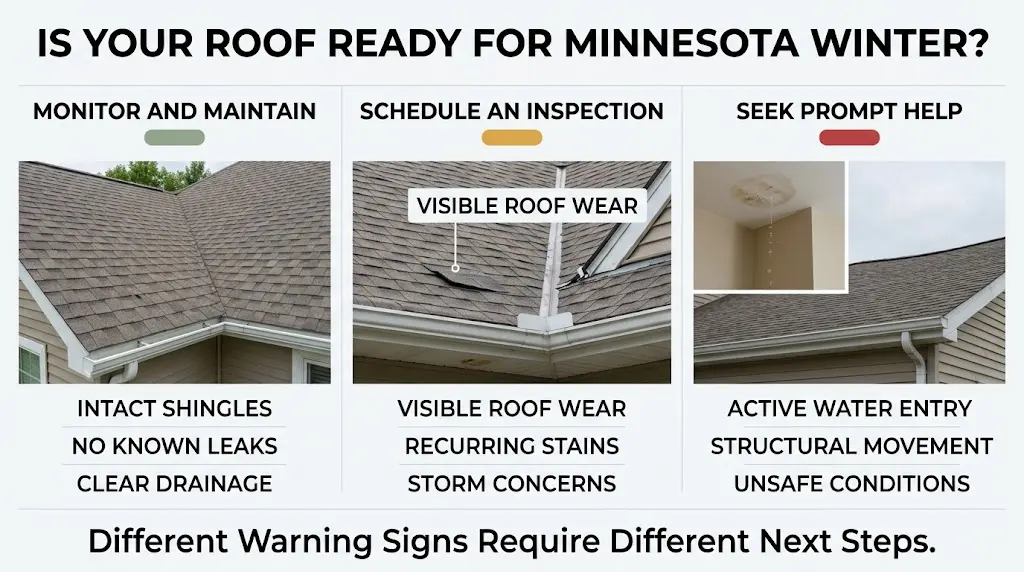
09 Minnesota Winter Roof Readiness: What Should You Do Next?
After identifying potential warning signs, homeowners need to decide how urgently to respond.
Not every problem requires immediate repairs, and not every older roof needs replacement.
A useful approach is to group roofing concerns by urgency.
Monitor and Maintain
Your roof may only need routine maintenance if:
Shingles appear intact from safe viewing locations.
No recurring leaks are present.
Gutters and downspouts drain properly.
No unexplained attic moisture is visible.
There are no obvious signs of structural movement.
Continue seasonal maintenance and document changes.
These observations are reassuring, but they do not guarantee that the roof is free from hidden defects.
Schedule an Inspection
Consider scheduling a roofing evaluation when:
Several shingles look damaged.
Flashing appears loose.
Gutters repeatedly overflow despite cleaning.
The roof has unresolved storm-related concerns.
Interior stains recur.
Roofing problems have returned after previous repairs.
A professional can help identify the source and recommend the appropriate next step.
Seek Prompt Professional Help
More urgent attention may be needed if:
Water is actively entering the home.
A roofline is newly or significantly sagging.
Structural movement is suspected.
A ceiling is visibly deforming or shows signs of imminent failure.
For suspected structural danger, keep people away from the affected area and seek qualified emergency assistance.
10 What Should Minnesota Homeowners Do Before Winter?
Once you understand the warning signs, the next step is choosing appropriate maintenance and inspection activities.
A practical fall preparation plan includes:
Review the roof from a safe location. Look for missing shingles, unusual wear, or visible roofline changes from the ground.
Observe drainage after rainfall. Watch for overflowing gutters, blocked downspouts, and water collecting near the foundation.
Check accessible attic spaces. Look for unexplained moisture, damaged insulation, or staining.
Review previous winter problems. Take note of recurring ice dams, leaks, or snow-related concerns.
Document storm-related damage. Keep photographs and relevant maintenance records.
Arrange appropriate repairs. Address confirmed roofing weaknesses before winter conditions limit safe access.
Schedule professional evaluation when needed. A qualified roofing contractor can inspect areas that are difficult to evaluate safely.
The purpose is to prepare based on actual risks rather than completing unnecessary work.
11 Does Your Roof Need Repair or Replacement Before Winter?
Discovering a roofing problem during fall does not automatically mean a full replacement is necessary.
Some issues can be corrected through localized repairs or maintenance.
When Roof Repair May Be Appropriate
A small number of shingles are damaged.
Flashing needs localized correction.
A plumbing pipe boot requires replacement.
A specific leak source has been identified.
The surrounding roof remains in good condition.
When Replacement May Be Worth Considering
Shingle deterioration is widespread.
Multiple roof areas have significant storm damage.
Leaks repeatedly return after appropriate repairs.
Roofing materials are near the end of their service life.
Major underlying roof work is required.
The decision depends on the condition of the roofing system, the extent of damage, and the expected performance of remaining materials.
Homeowners considering larger projects can read Bold North Roofing’s Maple Grove roof replacement guide for additional context about repair-versus-replacement decisions.
A professional inspection provides a more reliable basis for that decision than age or appearance alone.
Winter Roof Preparation Across Minnesota
Roofing conditions vary across Minnesota because homes differ in age, construction, roof design, exposure, and maintenance history.
Homes in Minneapolis and St. Paul may include older roofing assemblies or complex rooflines, while suburban properties in Maple Grove, Bloomington, and surrounding communities may have different drainage patterns and tree coverage.
Homeowners in areas such as Mankato, St. Cloud, and Rochester may also experience winter precipitation, winds, and changing temperatures that make seasonal roofing maintenance worthwhile.
These warning signs are relevant throughout Minnesota, but the specific steps needed will vary by property.
If you live in the Twin Cities, explore Bold North Roofing’s Minneapolis roofing services or its St. Paul roofing services.
The most useful question is not simply how harsh the upcoming winter may be, but whether the roof already has problems that need attention.
The Neighborhood Roof Signal Framework
When a neighbor replaces their roof, it doesn’t automatically mean your home needs a new one. However, nearby roof replacements can be a useful reminder to evaluate your own roof, especially after hailstorms, strong winds, or severe weather.
Here’s a simple four-step framework to help homeowners make informed roofing decisions:
Notice:
Pay Attention to Nearby Roof Work
Notice when several homes in your neighborhood receive roof repairs or replacements, particularly after major storms. This may indicate shared exposure to damaging weather conditions.
Compare:
Evaluate Your Roof’s Risk Factors
Compare your roof’s age, materials, condition, tree coverage, and exposure to recent storms. Neighboring homes may experience the same weather but have different roofing needs.
Check:
Look for Visible Warning Signs
Check for missing or lifted shingles, excessive granule loss, dented gutters, and signs of moisture. A ground-level inspection can help identify potential roofing concerns.
Decide:
Schedule a Professional Roof Inspection
If you notice damage or share similar risk factors with nearby homes, consider a professional inspection. A roofing expert can determine whether maintenance, repairs, or replacement may be necessary.
Key Takeaway: A neighbor’s roof replacement is a reason to pay attention, not proof that your roof needs replacing. Evaluate your home’s condition before making a roofing decision.
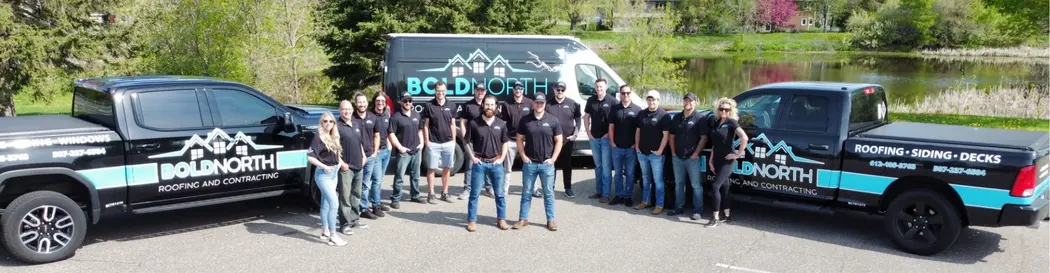
Bold North Roofing: A Local Inspection Can Give You a Clear Answer
At Bold North Roofing, the goal is to help homeowners understand what their roof actually needs. If your neighbor just replaced their roof, that does not mean you automatically need one too. But it may mean your home is worth checking, especially if it shares the same storm history, roof age, or neighborhood conditions.
A roof inspection can help identify whether your roof has storm damage, aging shingles, flashing concerns, gutter issues, attic moisture, or other warning signs. Homeowners can also meet the team or review financing options if larger roof work becomes part of the conversation.
The most important thing is getting a clear answer before assuming the worst. A roof may only need maintenance or a small repair. In other cases, replacement planning may make sense. The inspection helps separate guesswork from actual roof condition.
Frequently Asked Questions About Minnesota Winter Roof Warning Signs
- How can I tell if my roof is ready for a Minnesota winter?
Look for secure shingles, intact flashing, functional gutters, no known active leaks, and no signs of unexplained attic moisture or structural movement. A professional inspection can help identify problems that are not visible from the ground.
- What are the most important roof warning signs to check in fall?
Important signs include missing or lifted shingles, loose flashing, recurring ceiling stains, wet attic insulation, persistent gutter overflow, previous ice dam damage, and visible roofline sagging.
- Can an older roof survive another Minnesota winter?
Yes, some older roofs can continue performing adequately when their materials and roofing components remain in good condition. Age is one consideration, but widespread deterioration, leaks, and previous damage are more important factors when deciding whether repairs or replacement are needed.
- Do clogged gutters cause ice dams?
Clogged gutters can create drainage problems and frozen water buildup, but they are not the primary cause of roof ice dams. Ice dams generally result from uneven roof temperatures, snow cover, and heat loss from the home.
- Should I replace my roof before winter if I notice a leak?
Not necessarily. A localized leak may be repairable. A professional inspection can help determine whether the cause is isolated or part of a more widespread roofing problem.
- When should I schedule a roof inspection in Minnesota?
Consider an inspection when you notice damage, recurring leaks, storm-related concerns, or previous ice dam problems. Fall can be a convenient time to evaluate a roof before snow and ice complicate access.
- Are roof inspections free with Bold North Roofing?
Bold North Roofing offers free inspections after hail, wind, or storm damage. General preventive inspections may involve a service fee depending on the scope. Contact the team for current details.
Conclusion: Know the Warning Signs Before Minnesota Winter Arrives
Recognizing Minnesota winter roof warning signs can help homeowners make better decisions before snow, ice, and freezing temperatures arrive.
Missing shingles, failing flashing, clogged gutters, attic moisture, and recurring leaks deserve attention because they may reveal weaknesses that winter conditions can expose.
However, not every warning sign means your roof needs replacement. Some problems require routine maintenance, while others may benefit from localized repairs or professional evaluation.
The best approach is to understand the roof’s condition, prioritize meaningful concerns, and avoid unnecessary roofing work.
Is your roof ready for another Minnesota winter?
Schedule a roof inspection with Bold North Roofing & Contracting or contact the team to discuss your roofing concerns.
You can also call (612) 200-3881 to get started.