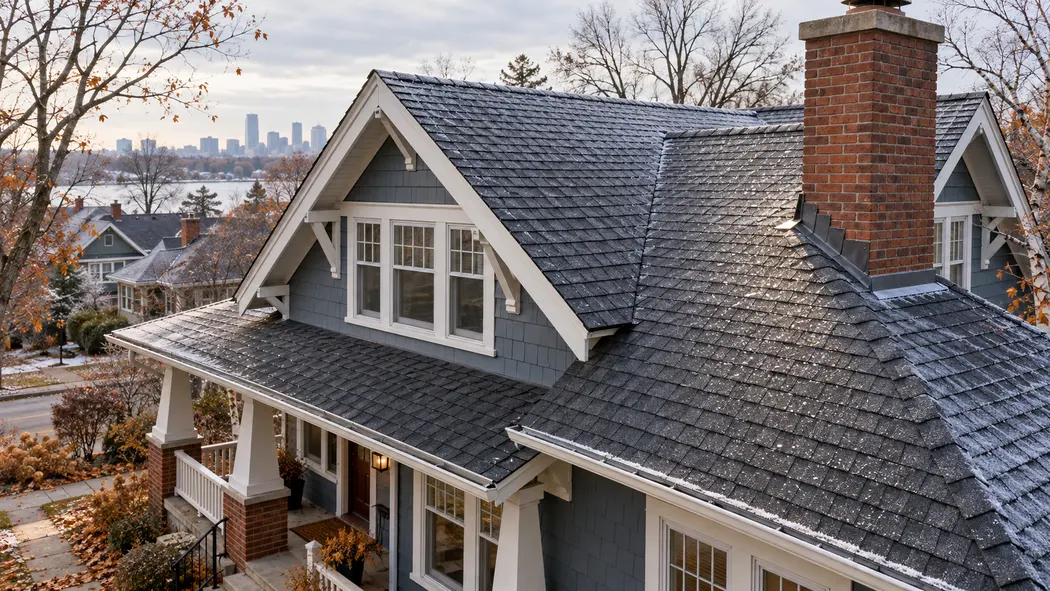
Minneapolis roof freeze-thaw cycles are an important concern as fall turns into winter. When temperatures move above and below freezing, snow and ice can melt, water can enter existing gaps, and trapped moisture may freeze again as temperatures drop.
For homeowners in Minneapolis, these changing conditions can expose weaknesses in shingles, flashing, roof penetrations, and other parts of the roofing system.
A roof does not automatically become damaged every time the temperature changes. Modern roofing systems are designed to handle seasonal weather. However, older materials, existing storm damage, deteriorated sealants, and poorly protected roof connections may be more vulnerable when moisture and freezing temperatures repeatedly interact.
The most important step is identifying weaknesses before winter weather makes them harder to inspect or repair.
In this guide, Bold North Roofing & Contracting explains how freeze-thaw cycles affect residential roofing materials, what warning signs Minneapolis homeowners should watch for, and when to consider a professional roof inspection in Minnesota.
How Do Freeze-Thaw Cycles Affect Minneapolis Roofs?
Freeze-thaw cycles may worsen existing roof weaknesses when water enters small gaps, cracks, or damaged building materials and then freezes.
Water expands as it freezes. When that expansion occurs inside vulnerable materials or openings, it can place additional stress on already weakened areas.
For Minneapolis homeowners, potential concerns include:
Existing cracks and gaps around roof flashing
Lifted, brittle, or deteriorating asphalt shingles
Damaged sealant around chimneys and skylights
Cracked rubber boots around plumbing vents
Moisture entering vulnerable roof valleys
Water freezing inside blocked gutters
Ice accumulation near roof edges
Hidden attic moisture and ceiling stains
The risk depends on the roof’s condition, construction, drainage, and whether water is able to enter vulnerable areas.
A properly installed roof in good condition can generally withstand ordinary seasonal temperature changes. Problems become more concerning when existing damage allows moisture to reach places where it should not.
What Is a Freeze-Thaw Cycle?
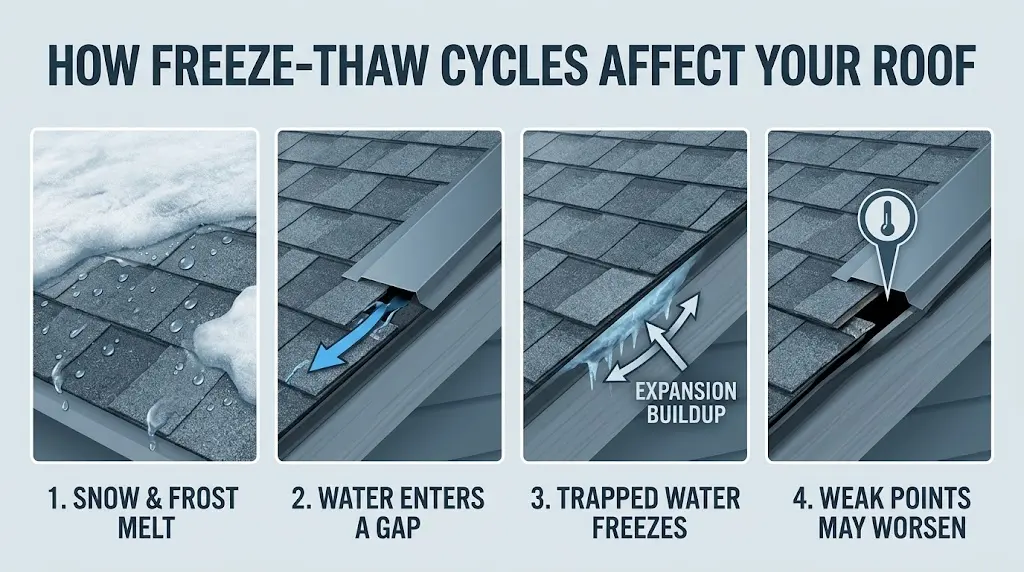
A freeze-thaw cycle occurs when temperatures fluctuate between conditions that allow water to freeze and conditions that allow ice to melt.
Imagine a Minneapolis afternoon when temperatures rise above 32°F. Frost or accumulated snow may begin melting on exposed roof surfaces.
Later that evening, temperatures fall below freezing again.
Any water remaining in vulnerable openings or absorbent materials may freeze.
When temperatures warm again, the ice melts. This sequence can repeat during changing weather.
The Four Stages of a Freeze-Thaw Cycle
1. Temperatures rise
Sunlight or warmer air causes frost, snow, or existing ice to melt.
2. Water moves
Meltwater follows the roof slope and may enter existing cracks, deteriorated seals, or poorly protected roofing connections.
3. Temperatures fall
Water trapped in susceptible areas freezes and expands.
4. The cycle repeats
Repeated wetting, freezing, and thawing may gradually worsen vulnerable materials or existing openings.
Not every freeze-thaw cycle creates roof damage. The concern is prolonged moisture exposure combined with existing weaknesses and repeated freezing.
01 How Freeze-Thaw Cycles Can Affect Asphalt Shingles
Asphalt shingles are commonly installed on homes throughout Minneapolis and the surrounding Twin Cities.
These shingles are designed to withstand seasonal weather exposure, but aging and previous storm damage can affect their performance.
When temperatures become colder, some asphalt roofing materials are less flexible than they are during warmer conditions.
That does not mean cold weather automatically causes shingles to crack. However, existing cracks, lifted edges, and deteriorated seals may become more vulnerable to wind and moisture.
Shingle Warning Signs to Watch For
Lifted shingle edges
Wind-damaged or poorly sealed shingles may create openings where moisture can enter.
Cracked shingles
Older shingles may develop visible cracks as they weather and lose flexibility.
Curling shingles
Raised or curled edges may indicate age-related deterioration.
Granule loss
Widespread or concentrated granule loss may suggest roofing wear or previous damage.
Missing shingles
Missing roofing materials can expose the underlayment and other protective layers to precipitation.
Why Existing Shingle Damage Matters
If meltwater reaches an unprotected part of the roof, repeated moisture exposure and freezing conditions may contribute to further deterioration.
However, freeze-thaw cycles are not the only cause of these warning signs. Shingle damage can also result from wind, hail, aging, manufacturing defects, or installation problems.
Homeowners dealing with previous storms can review Bold North Roofing’s Minnesota storm damage guide for additional warning signs.
02 Why Roof Flashing Deserves Attention Before Winter
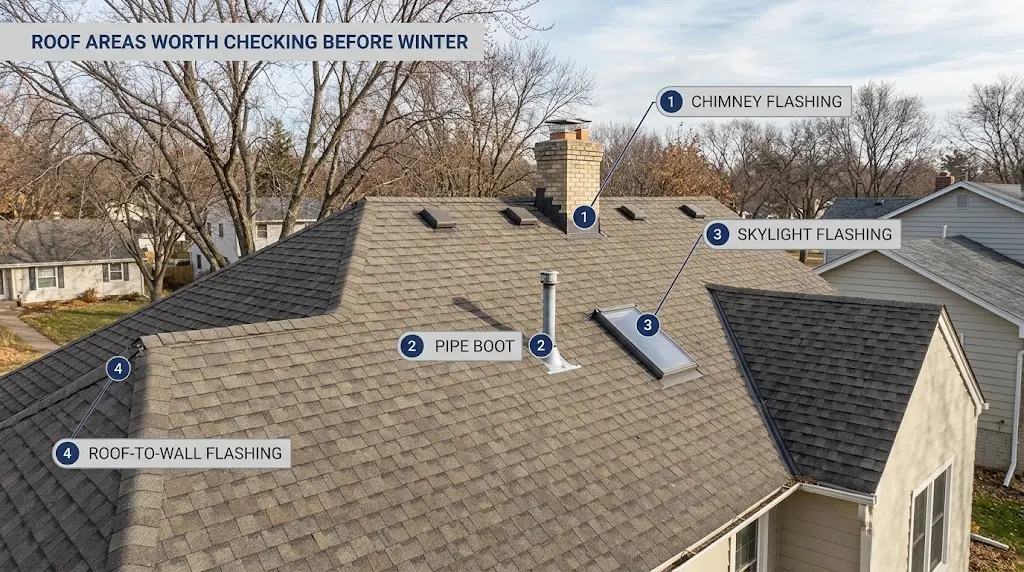
Roof flashing protects vulnerable areas where roofing materials meet chimneys, walls, skylights, and other building components.
Flashing is especially important because these intersections must remain watertight despite seasonal movement and weather exposure.
If flashing is loose, corroded, improperly installed, or surrounded by failing sealant, water may enter the roofing system.
Common Flashing Concerns
Raised or separated flashing
Cracked sealant
Rusted or corroded metal
Gaps around chimneys
Loose flashing at roof-to-wall intersections
Water staining near skylights
Recurring leaks after melting snow
Can Freezing Water Make Flashing Problems Worse?
Yes, under certain conditions.
When moisture enters an existing gap around flashing and freezes, expansion may place additional pressure on the surrounding vulnerable materials.
Repeated wetting and freezing can also contribute to deterioration of already damaged masonry, mortar, or sealants.
The flashing itself does not automatically fail because temperatures change. Proper installation and the condition of adjacent materials determine how well the roof connection performs.
For Minneapolis homes with masonry chimneys, deteriorated chimney mortar can create a separate moisture concern that may require masonry repair in addition to roofing work.
03 Roof Vents, Pipe Boots, and Skylights Can Become Vulnerable
Every opening through a roof requires carefully installed flashing or sealing components.
Common roof penetrations include:
Plumbing vent pipes
Roof exhaust vents
Skylights
Chimneys
Other roof-mounted equipment
Rubber pipe boots, sealants, and other flexible components may deteriorate with age, sunlight, and repeated weather exposure.
When these materials begin cracking or separating, they may create pathways for moisture.
What Should Minneapolis Homeowners Look For?
Check visible areas for:
Cracked rubber pipe boots
Loose vent flashing
Gaps around roof penetrations
Deteriorated sealant
Water stains near skylights
Moisture marks around attic vent openings
These problems can be difficult to identify from the ground, especially on taller homes or steep roofs.
A professional inspection can help determine whether the issue requires localized repair or additional evaluation.
04 Roof Valleys Can Hold Debris and Concentrate Water Flow
Roof valleys are the channels formed where two roof slopes meet.
These areas receive runoff from adjoining roof sections, which makes proper drainage especially important.
During fall, leaves and branches may collect inside roof valleys.
When snow begins melting, debris can restrict drainage or retain moisture against roofing materials.
What to Watch For
Leaves packed into roof valleys
Small branches trapped against shingles
Deteriorating valley flashing
Areas that remain wet after surrounding shingles dry
Existing water stains near roof intersections
A few scattered leaves generally do not indicate a roofing problem.
More significant debris accumulation may deserve attention because it can hide damage or interfere with drainage.
For Minneapolis homeowners, keeping visible roof drainage areas clear before winter can make it easier to identify problems before snow and ice cover the roof.
05 Can Freeze-Thaw Cycles Contribute to Ice Dams?
reeze-thaw weather and ice dams are related, but they are not identical.
An ice dam is a ridge of ice that forms near the edge of a roof and prevents melting snow from draining normally.
Ice dams commonly develop when snow melts on warmer roof sections and refreezes at colder eaves.
The University of Minnesota Extension’s guide to preventing ice dams explains that uneven roof temperatures, snow cover, heat loss from the home, and outdoor temperatures all influence ice dam formation.
Why Ice Dams Matter for Minneapolis Roofs
When ice accumulates near the eaves, additional meltwater may collect behind it.
If water reaches vulnerable shingle overlaps or unprotected roof areas, moisture may enter the roofing system.
Potential consequences include:
Wet attic insulation
Ceiling stains
Damaged drywall
Moisture around exterior walls
Deterioration of vulnerable roof components
How Can Homeowners Reduce Ice Dam Risk?
Long-term prevention focuses on addressing unwanted heat transfer and roof assembly conditions.
Useful measures may include:
Sealing air leaks between living areas and the attic
Improving insulation where necessary
Checking appropriate attic ventilation and roof assembly design
Evaluating previous winter moisture problems
Maintaining functional gutters and downspouts
The U.S. Department of Energy explains how cold-climate roof eave protection and attic improvements help reduce moisture intrusion associated with ice dams.
Important: Clear gutters are beneficial for drainage, but gutter cleaning alone does not prevent ice dams. Ice dam prevention requires attention to the underlying roof temperature conditions.
For additional guidance, read Bold North Roofing’s Ice Dam Prevention Guide for Minnesota Homes.
06 Can Freeze-Thaw Weather Cause Hidden Roof Leaks?
Cold weather does not automatically create a leak in a properly functioning roofing system.
However, freezing and thawing can expose existing moisture-entry problems that were less noticeable during dry weather.
Water entering through damaged flashing or shingles can travel along framing, roof decking, and other materials before becoming visible inside a home.
Signs of Hidden Roof Moisture
Ceiling discoloration
Brown or yellow stains may indicate previous or ongoing moisture.
Damp attic insulation
Wet insulation can result from roof leaks, condensation, or other moisture sources.
Peeling paint
Recurring moisture may cause paint to bubble or peel.
Musty odors
Persistent odors may indicate unwanted moisture in an enclosed space.
Water stains near chimneys
Moisture near chimney walls may be related to flashing, masonry, or other building-envelope problems.
Not Every Attic Moisture Problem Is a Roof Leak
Warm, humid indoor air can enter a cold attic through ceiling air leaks.
Under suitable conditions, that moisture may condense on cold surfaces, including roof decking.
Condensation and roof leaks can produce similar signs, so identifying the actual source is important.
A roofing professional or qualified building-envelope specialist may need to examine the attic, roof penetrations, insulation, and ventilation conditions.
07 How Previous Storm Damage Can Affect Winter Roof Performance
Minneapolis roofs do not begin winter in identical condition.
Some homes may have relatively new roofing materials with no visible problems.
Others may have aging shingles, previous hail impacts, loose flashing, or wind-related damage.
These existing conditions can influence how roofing systems respond to winter weather.
Common Storm-Related Weaknesses
Shingles lifted by strong winds
Missing shingle tabs
Hail-related damage
Loose ridge or hip shingles
Damaged flashing
Debris strikes near roof penetrations
If roofing materials are already compromised, melting snow and repeated moisture exposure may make existing issues more noticeable.
That is why a professional inspection can be helpful after significant storm events, especially if the roof has not been evaluated since the damage occurred.
For additional context, Bold North Roofing discusses how seasonal weather influences roofing life in How Long Does a Roof Last in Midwest Weather?.
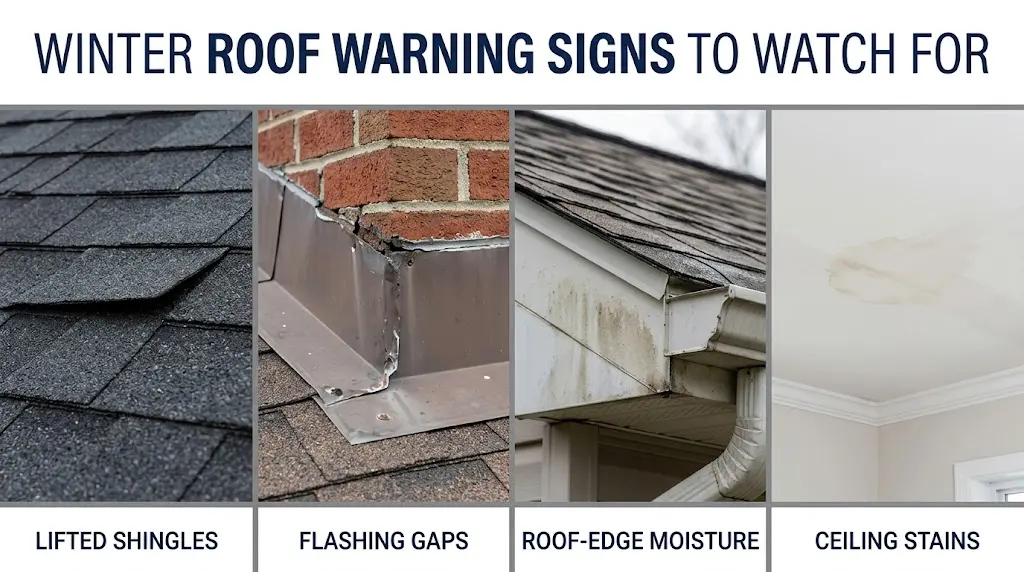
08 Warning Signs Your Minneapolis Roof May Need Attention
Homeowners do not need to climb onto a roof to recognize some common warning signs.
Many problems can be observed from the ground, through upper-level windows, or from safely accessible attic spaces.
Exterior Warning Signs
Missing shingles
Lifted or curled shingle edges
Visible gaps around roof flashing
Deteriorated chimney mortar
Cracked or damaged pipe boots
Repeated gutter overflow
Damaged or loose gutters
Debris accumulating in roof valleys
Interior Warning Signs
Brown ceiling stains
Damp or discolored attic framing
Wet insulation
Recurring moisture after snowmelt
Peeling paint near ceilings
Unexplained water marks along exterior walls
Some symptoms may indicate condensation or other building issues instead of roof damage.
The best next step is to determine where the moisture originates rather than assuming every stain requires a new roof.
09 What Can Minneapolis Homeowners Do Before Freeze-Thaw Weather Arrives?
Fall is a practical time to evaluate roofing conditions before snow and ice make access more difficult.
A preventive approach focuses on identifying existing problems rather than replacing roofing components unnecessarily.
Inspect Visible Shingle Conditions
Look for missing, curled, lifted, or visibly damaged shingles.
Pay attention to roof areas previously affected by storms.
Check Flashing and Roof Penetrations
Look for noticeable gaps near chimneys, skylights, and vents.
Have damaged materials evaluated before snow accumulates.
Keep Gutters and Roof Valleys Clear
Remove heavy leaf buildup and check that downspouts drain properly.
Cleaning gutters improves drainage but is not a complete ice dam prevention strategy.
Investigate Attic Moisture
Look for wet insulation, unusual staining, or condensation.
Consider evaluating air sealing and insulation where recurring winter moisture problems exist.
Address Existing Roof Leaks
Do not postpone known leaks simply because freezing weather has not yet arrived.
Moisture intrusion can continue during rain, snowmelt, and other winter conditions.
Schedule a Professional Inspection When Needed
A professional evaluation can help identify problems that are difficult to assess from the ground.
Bold North Roofing explains its inspection process in What Happens During a Professional Roof Inspection?.
Safety reminder: Never walk on a wet, frosted, snow-covered, or icy roof. Avoid removing ice with sharp tools or direct heat. Elevated roofing work should be handled by qualified professionals.
10 Does Freeze-Thaw Roof Damage Always Require Replacement?
No. A roofing problem that becomes noticeable during freezing weather does not automatically mean the entire roof needs replacement.
The appropriate solution depends on the age of the roof, the extent of deterioration, the condition of surrounding materials, and whether damage is localized or widespread.
When Roof Repair May Be Appropriate
Localized repairs may address problems such as:
A limited number of damaged shingles
A cracked plumbing pipe boot
Loose chimney flashing
A small, identifiable leak
A damaged roof vent seal
When Roof Replacement May Be Worth Considering
A larger roofing project may be appropriate when:
Shingle deterioration affects multiple slopes
Leaks repeatedly return after proper repairs
Roofing materials are nearing the end of their service life
Storm damage is extensive
Underlying roof decking requires major work
Several roofing components have widespread problems
A professional roof evaluation should consider the entire system, not just one visible symptom.
Homeowners can learn more about Minneapolis roof repair and replacement services or review Bold North Roofing’s guide to roof repair versus replacement.
11 When Should You Schedule a Minneapolis Roof Inspection?
Not every seasonal temperature change requires professional roofing work.
However, an inspection may be appropriate when homeowners notice visible roofing deterioration, active leaks, or recurring winter moisture concerns.
Consider scheduling a roof inspection if:
Your home experienced significant hail or wind damage.
Multiple shingles are missing or lifted.
Water stains appear after snowmelt.
Flashing around a chimney looks damaged.
Ice dams caused interior leaks during previous winters.
Attic insulation repeatedly becomes damp.
Your roof is aging and has not been evaluated recently.
A fall inspection can be especially useful because it allows roofing professionals to evaluate exposed surfaces before snowfall.
Bold North Roofing & Contracting provides roof inspection services for homeowners throughout Minneapolis and the Twin Cities.
The purpose of an inspection is to document the roof’s condition and determine whether maintenance, repairs, or more extensive work are necessary.
Minneapolis Roof Freeze-Thaw Concerns Across the Twin Cities
Homes throughout Minneapolis experience seasonal temperature changes, winter precipitation, and weather-related roofing concerns.
However, the condition of each roofing system depends on factors beyond the weather.
Roof age, previous repairs, installation quality, slope, attic conditions, and surrounding trees can all influence maintenance needs.
These winter roofing considerations are relevant to homeowners throughout Minneapolis neighborhoods and nearby communities, including:
South Minneapolis
Longfellow
Nokomis
Linden Hills
Northeast Minneapolis
Uptown Minneapolis
St. Louis Park
Golden Valley
Richfield
Edina
Bloomington
Older Minneapolis homes may have different roofing and attic construction characteristics than recently built properties.
For example, one property may need localized flashing repairs while another may benefit from attic air-sealing improvements.
Understanding the actual condition of the roof is more useful than assuming every Minneapolis home faces identical risks.
The Neighborhood Roof Signal Framework
When a neighbor replaces their roof, it doesn’t automatically mean your home needs a new one. However, nearby roof replacements can be a useful reminder to evaluate your own roof, especially after hailstorms, strong winds, or severe weather.
Here’s a simple four-step framework to help homeowners make informed roofing decisions:
Notice:
Pay Attention to Nearby Roof Work
Notice when several homes in your neighborhood receive roof repairs or replacements, particularly after major storms. This may indicate shared exposure to damaging weather conditions.
Compare:
Evaluate Your Roof’s Risk Factors
Compare your roof’s age, materials, condition, tree coverage, and exposure to recent storms. Neighboring homes may experience the same weather but have different roofing needs.
Check:
Look for Visible Warning Signs
Check for missing or lifted shingles, excessive granule loss, dented gutters, and signs of moisture. A ground-level inspection can help identify potential roofing concerns.
Decide:
Schedule a Professional Roof Inspection
If you notice damage or share similar risk factors with nearby homes, consider a professional inspection. A roofing expert can determine whether maintenance, repairs, or replacement may be necessary.
Key Takeaway: A neighbor’s roof replacement is a reason to pay attention, not proof that your roof needs replacing. Evaluate your home’s condition before making a roofing decision.

Bold North Roofing: A Local Inspection Can Give You a Clear Answer
At Bold North Roofing, the goal is to help homeowners understand what their roof actually needs. If your neighbor just replaced their roof, that does not mean you automatically need one too. But it may mean your home is worth checking, especially if it shares the same storm history, roof age, or neighborhood conditions.
A roof inspection can help identify whether your roof has storm damage, aging shingles, flashing concerns, gutter issues, attic moisture, or other warning signs. Homeowners can also meet the team or review financing options if larger roof work becomes part of the conversation.
The most important thing is getting a clear answer before assuming the worst. A roof may only need maintenance or a small repair. In other cases, replacement planning may make sense. The inspection helps separate guesswork from actual roof condition.
Frequently Asked Questions About Minneapolis Roof Freeze-Thaw Cycles
- What is a freeze-thaw cycle on a roof?
A freeze-thaw cycle occurs when snow, frost, or ice melts during warmer conditions and then freezes again when temperatures fall. Problems may develop when water enters existing gaps or vulnerable materials and expands as it freezes.
- Can freeze-thaw cycles damage asphalt shingles?
Freeze-thaw conditions can contribute to roofing deterioration when moisture reaches existing cracks, damaged seams, or vulnerable areas. However, intact asphalt shingles are designed to withstand seasonal weather changes, and not every temperature fluctuation causes damage.
- Can freezing temperatures cause roof leaks?
Freezing temperatures alone do not necessarily cause roof leaks. Existing openings in shingles, flashing, or roof penetrations may allow moisture to enter during rain or snowmelt. Repeated wetting and freezing may worsen some vulnerable areas.
- Are freeze-thaw cycles the same as ice dams?
No. Freeze-thaw cycles describe repeated freezing and melting conditions. Ice dams are ridges of ice that form near roof edges when snowmelt refreezes, often because of uneven roof temperatures.
- How can I tell if my roof has winter moisture damage?
Warning signs may include ceiling stains, damp attic insulation, deteriorating flashing, lifted shingles, or recurring leaks after snowmelt. A professional inspection can help determine the source.
- Does freeze-thaw damage mean I need a roof replacement?
Not always. Localized problems may be repairable. Replacement is more likely to be considered when roofing materials show widespread deterioration or the roofing system has reached the end of its useful life.
Conclusion: Protect Your Minneapolis Roof Before Winter Temperature Changes
Minneapolis roof freeze-thaw cycles are a normal part of seasonal weather, but repeated melting and freezing can place additional stress on roofing systems that already have vulnerable areas.
Damaged shingles, deteriorated flashing, weakened sealants, and existing moisture problems deserve attention before snow and ice make roofing conditions more difficult to evaluate.
The good news is that not every warning sign indicates major roof damage. Many roofing problems can be identified early and addressed through appropriate maintenance or localized repairs.
For Minneapolis homeowners, a proactive approach begins with understanding how winter weather affects the roof and recognizing when professional help may be necessary.
Not sure if your Minneapolis roof is ready for winter?
Explore Bold North Roofing & Contracting’s Minneapolis roofing services or contact the team to schedule a roofing evaluation and discuss the best next steps for your home.