In Minnesota, roof damage is rarely a single-event failure. It is almost always the result of long-term exposure, repeated moisture intrusion, and gradual breakdown at the weakest points of the exterior system. While homeowners tend to focus on shingles and flashing, the truth is that many roof problems begin well below the roofline.
Siding plays a critical role in protecting the roof by controlling how water, air, and temperature interact with the structure. When siding performs well, it shields roof components from constant stress. When it fails, the roof becomes vulnerable even if the shingles themselves appear intact.
Understanding this relationship explains why roof repairs often feel temporary when siding issues are ignored.
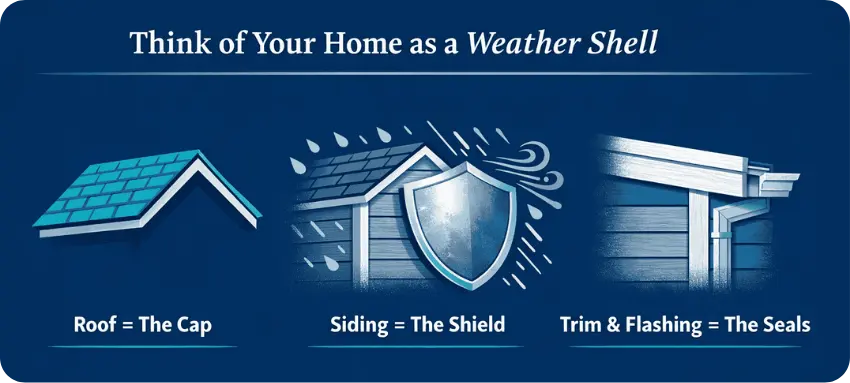
It Is Not the Roof or the Siding. It Is the Connection
Exterior systems in Minnesota are under constant pressure from extreme seasonal changes. Wind driven rain does not fall straight down. Snow accumulates against walls. Spring thaw pushes large volumes of water off the roof and directly onto siding, trim, and fascia. Repeated freeze and thaw cycles expand small gaps into larger openings.
Because of this, failures do not occur on flat surfaces alone. They occur at transitions.
Key transition zones include:
- Where roof decking meets fascia boards
- Where siding terminates beneath roof edges
- Where soffits and intake ventilation sit below shingles
- Where trim, corner boards, and flashing intersect
Siding protects these areas by shedding water away from them and maintaining a continuous barrier along the wall system. When that barrier breaks down, moisture moves inward and upward, often reaching roof components from below.
How Siding Manages Water After It Leaves the Roof
A roof sheds water by design. What happens next depends almost entirely on the siding system.
Well installed siding creates a clear drainage path that moves water down and away from the home. Flashing, trim details, and panel overlaps all work together to keep moisture from slowing down or turning back toward the structure.
When siding starts to fail, water behavior changes. It no longer moves cleanly away. It can pool near roof edges, soak into fascia boards, or slip behind siding panels. Over time, that moisture works its way upward and inward toward roof decking and wall cavities.
This is one of the most common causes of rot along roof edges in Minnesota homes. The damage does not come from above. It comes from repeated exposure below the roofline.
Why Roof Edges Are the Most Vulnerable Area
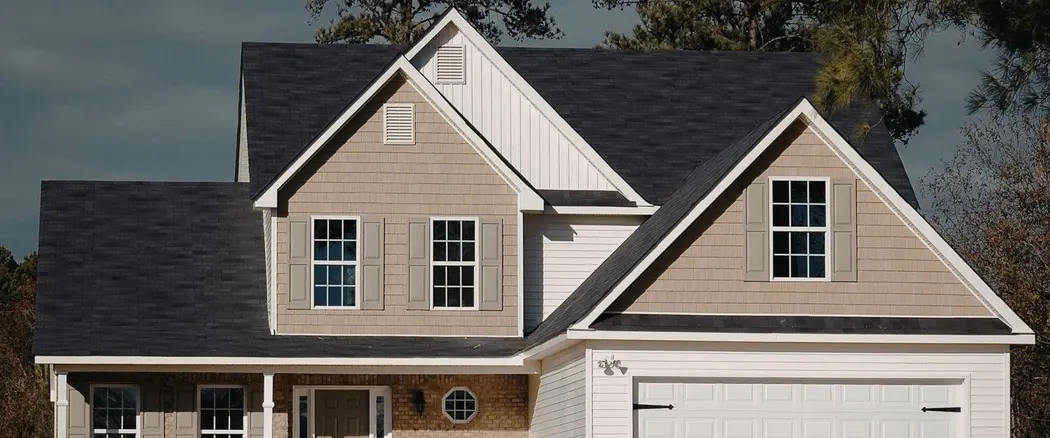
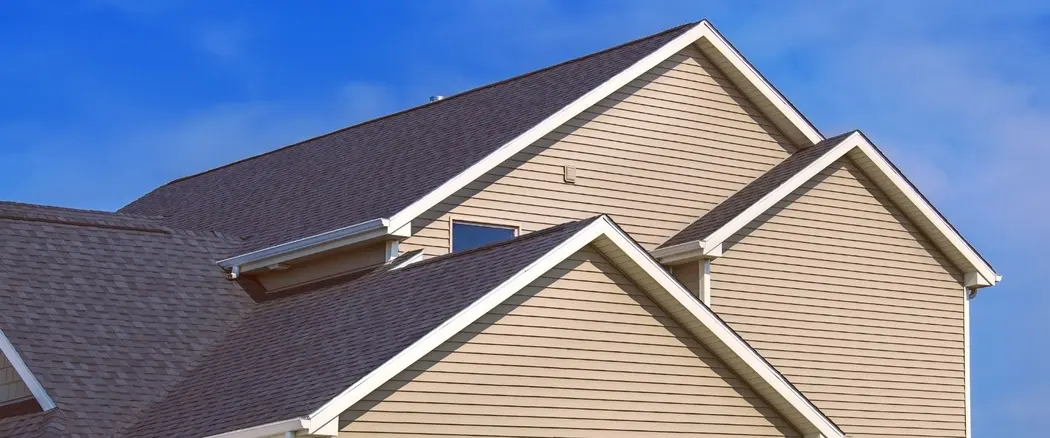
Roof edges sit at the intersection of several materials. Shingles, underlayment, fascia, soffits, and siding all meet in a very small area. If any one of those components underperforms, the entire edge becomes vulnerable. Siding plays a major role here by protecting:
- Fascia boards that support the roof edge
- Soffit areas that allow attic airflow
- Wall to roof transition points that are difficult to seal
When siding around these areas is damaged or poorly installed, moisture exposure increases and roof components deteriorate faster than expected.
Siding and Roof Ventilation Work as a Single System
Roof ventilation depends heavily on soffits and intake vents located within the siding system. These components allow cold air to enter the attic and help regulate temperature and moisture year round.
If siding near soffits is warped, blocked, or improperly installed, airflow becomes restricted. When ventilation suffers, several problems follow:
- Heat builds up beneath the roof deck
- Moisture accumulates in attic spaces
- Shingles deteriorate faster than expected
- Mold risk increases within the structure
Healthy siding supports proper ventilation. Compromised siding undermines it. A roof cannot perform correctly when the ventilation system around it is failing.
Storm Damage Does Not Stop at the Roofline
In Minnesota, hail and high winds almost always impact siding before problems show up on the roof. Cracked panels, loosened seams, and damaged trim create new openings for water during storms.
Once moisture enters behind siding, it often travels laterally across walls and upward toward roof edges. The resulting damage may not be visible for months. When it finally appears, it often looks like a roofing issue even though the initial damage occurred on the siding.
This delayed failure pattern is one of the most common reasons homeowners experience repeat roof problems after storms.
Siding Issues That Commonly Shorten Roof Lifespan
Certain siding failures consistently lead to premature roof damage in Minnesota homes.
These include:
- Rotting fascia boards caused by trapped moisture
- Poorly sealed wall to roof transitions
- Blocked or damaged soffit ventilation
- Insect intrusion near rooflines due to deteriorated materials
Each of these conditions increases stress on roof components and reduces the effective lifespan of the roofing system.
Why Siding Is Part of Every Bold North Inspection
Bold North approaches exterior protection as a complete system, not a checklist of individual materials.
Roof inspections include close evaluation of siding near roof edges, trim integrity, soffit condition, ventilation pathways, and water flow patterns during rain and snowmelt. This allows potential failures to be identified before they result in visible roof damage.
Replacing a roof without addressing compromised siding often leads to repeat repairs. Addressing both together leads to long term stability.
The Long Term Roof Protection Decision
Siding plays a direct and often overlooked role in roof performance. It controls water movement, supports ventilation, protects vulnerable transitions, and shields roof components from constant environmental stress.
When siding fails, the roof follows.
A comprehensive exterior evaluation that considers siding and roofing together is the most effective way to protect a home long term. If roof problems keep returning, the source is often not the shingles. It is the walls beneath them.
So, Should You Replace Your Siding?
Siding replacement is not always driven by appearance. In many cases, it is a preventative decision made to protect the roof and structural components of the home.
Homeowners should consider siding replacement when roof issues persist without a clear cause, when fascia and trim show signs of deterioration, or when moisture problems continue despite roof repairs.
Addressing siding at the right time can extend roof life, reduce long term maintenance costs, and protect the home as a whole.
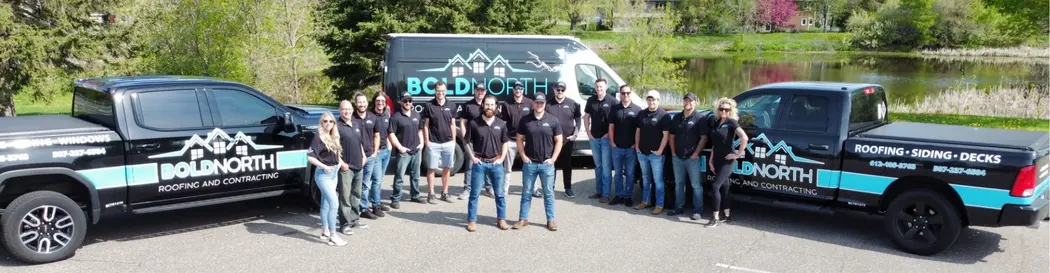
Hiring a certified roofing company safeguards both your home and investment through expert installation, robust warranties, and strict safety protocols. Bold North Roofing & Contracting combines top certifications, fully licensed operations, and proven service excellence to protect Minnesota and Wisconsin homeowners. Schedule a free inspection with our certified experts at Bold North or call (612) 200-3881 today.