
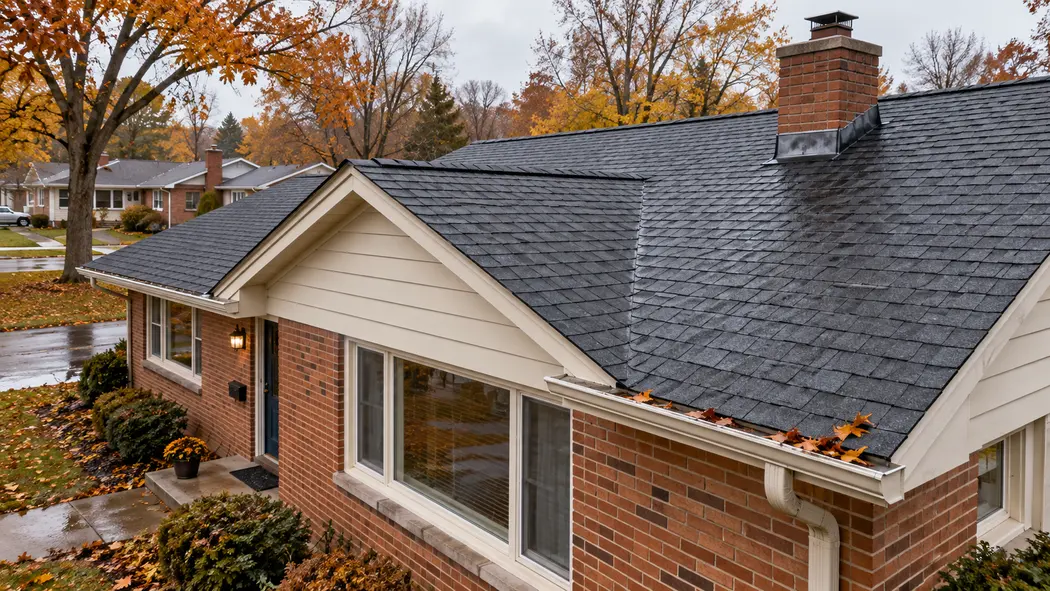
Why Fall Is the Time to Find Hidden Roof Leaks in Richfield, MN
Finding hidden roof leaks in Richfield MN during fall can help homeowners address moisture problems before snow, freezing temperatures, and winter weather make roofing conditions more difficult to evaluate.
Not every roof leak causes water to drip directly from the ceiling. Some begin as small openings around chimney flashing, plumbing vents, roof valleys, or aging shingles. Water may enter the roofing system and travel along framing, insulation, or other concealed surfaces before becoming visible inside the home.
For Richfield homeowners, autumn rainfall provides an opportunity to recognize these problems before winter. A roof that appears fine from the driveway may still have weaknesses that deserve attention, especially after summer storms or years of normal weather exposure.
The goal is not to assume that every older roof is leaking. Instead, homeowners should understand where hidden leaks commonly develop, recognize early moisture warning signs, and determine when professional evaluation is necessary.
In this guide, Bold North Roofing & Contracting explains why fall is a useful time to investigate potential roof leaks, what signs to watch for, and how to prepare a Richfield home for the colder months ahead.
Why Should Richfield Homeowners Look for Hidden Roof Leaks in Fall?
Fall is a practical time to check for hidden roof leaks because roofing materials are generally easier to observe before snowfall, and autumn rainfall may reveal water-entry problems that remained unnoticed during dry weather.
Homeowners should watch for:
Brown or yellow ceiling stains
Damp or discolored attic insulation
Water marks around chimneys
Peeling paint near ceilings
Musty odors in attic spaces
Cracked or deteriorating roof flashing
Missing or lifted shingles
Damaged plumbing vent boots
Debris collecting in roof valleys
Recurring moisture after rainfall
These symptoms do not always indicate a roof leak. Condensation, plumbing issues, and other moisture sources can create similar warning signs.
If the cause is uncertain, a professional roof inspection in Richfield, Minnesota can help identify the source and determine whether repairs are needed.
Why Fall Is a Good Time to Find Roof Leaks in Richfield, Minnesota
Roof leaks can occur during any season. However, the transition between summer and winter provides an opportunity to investigate existing problems before snow and ice cover the roofing surface.
Richfield homes may experience heavy summer rain, thunderstorms, hail, and strong winds. Those weather events can affect shingles, flashing, roof vents, and other roofing components.
Some damage becomes visible immediately, while other weaknesses may not produce noticeable interior symptoms until later.
Three Reasons Fall Roof Leak Detection Matters
1. Autumn rain can reveal existing weaknesses.
Rainwater moving across the roof may enter gaps around deteriorating flashing or damaged shingles. Moisture stains that develop after rainfall can help narrow down possible sources.
2. Roof components are easier to inspect before snowfall.
Once snow and ice accumulate, certain roofing surfaces, flashing details, and drainage areas may become difficult or unsafe to access.
3. Existing moisture problems can be investigated before winter.
Addressing confirmed leaks helps limit further moisture exposure during subsequent rainfall and snowmelt.
Fall inspection does not guarantee that every concealed defect will be found. It does, however, provide a useful opportunity to evaluate the roof’s condition before winter complicates access.
01 Hidden Roof Leaks Often Start Around Flashing
Roof flashing is one of the first areas to examine when investigating a possible roof leak.
Flashing consists of weather-resistant components installed around roof intersections and penetrations to help direct water away from vulnerable openings.
Common flashing locations include:
Brick chimneys
Skylights
Dormer walls
Roof-to-wall connections
Plumbing vent pipes
Roof valleys
When flashing becomes loose, corroded, improperly installed, or separated from adjacent roofing materials, moisture may enter.
What Does Damaged Flashing Look Like?
Homeowners may notice:
Raised metal edges
A section of flashing may no longer sit securely against the adjoining roofing materials.
Cracked or deteriorated sealant
Aging sealant can lose adhesion or develop visible gaps.
Rust or corrosion
Deterioration may affect exposed metal flashing components.
Staining around chimneys
Water marks on the interior or exterior near a chimney may indicate flashing, masonry, or other moisture-related problems.
Recurring leaks near roof intersections
Water appearing after rainfall may indicate that a vulnerable roof connection requires evaluation.
Why Are Flashing Leaks Sometimes Difficult to Find?
Water entering near a chimney does not always drip directly below the chimney.
It may travel along roof decking, rafters, or other surfaces before reaching an interior ceiling.
This is why identifying the first visible stain is not always enough to locate the original entry point.
02 Small Shingle Problems May Allow Moisture Into the Roof
Asphalt shingles are commonly used on homes throughout Richfield and the Twin Cities.
These roofing materials create an overlapping, water-shedding surface designed to protect the layers beneath.
However, older shingles, previous storm damage, or installation defects can reduce their effectiveness.
Shingle Warning Signs
Missing shingles
Lifted shingle tabs
Cracked shingles
Curling edges
Exposed roofing underlayment
Widespread granule loss
Damaged ridge or hip shingles
A single damaged shingle does not automatically mean the entire roofing system needs replacement.
Some localized problems can be corrected through appropriate roof repairs.
However, if multiple sections show deterioration or leaks repeatedly return, a more comprehensive evaluation may be necessary.
Can a Roof Leak Without Missing Shingles?
Yes.
Leaks may develop around flashing, fasteners, roof penetrations, damaged underlayment, or other vulnerable connections even when most shingles appear intact.
This is one reason a professional roofing inspection evaluates more than just the visible shingle surface.
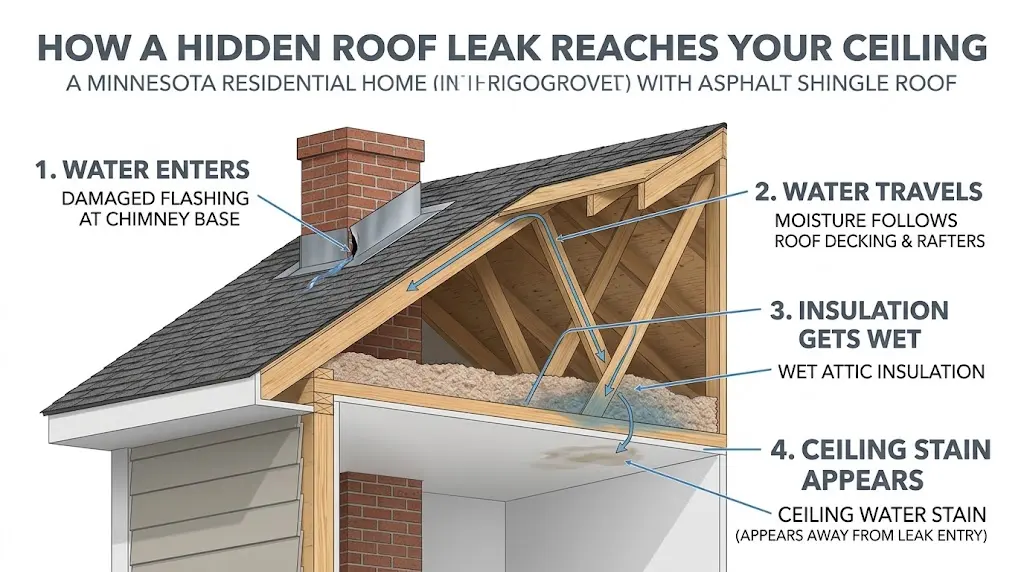
03 How Water Travels From the Roof to a Ceiling Stain
One of the most important things Richfield homeowners should understand is that the visible location of a roof leak may be different from the actual water-entry point.
Imagine rainwater entering through a small gap beside a chimney.
Instead of falling immediately into the room below, the water may follow a sloped roof deck, move along a rafter, or contact insulation.
It might eventually reach drywall several feet away from the original opening.
The Hidden Leak Path
Stage 1: Water enters the roof.
Rainwater reaches an existing opening in flashing, shingles, or another roofing component.
Stage 2: Moisture follows building materials.
Water can move along framing or roof decking rather than dripping straight downward.
Stage 3: Concealed materials become damp.
Insulation, wood, or the backside of drywall may absorb or retain moisture.
Stage 4: Visible warning signs develop.
A ceiling stain, peeling paint, damp surface, or musty odor may become noticeable.
This sequence helps explain why a small interior stain may require investigation beyond the visible area.
It also explains why repairing drywall without correcting the original moisture source may not solve the problem.
04 Roof Valleys Can Conceal Moisture Problems
Roof valleys are the areas where two sloping roof sections meet.
Because water from adjoining roof surfaces flows through these intersections, properly functioning valley materials are important for roof drainage.
During fall, leaves, twigs, and other debris may collect inside roof valleys.
What Problems Can Develop?
Debris may slow drainage, retain moisture, or conceal existing roofing damage.
Potential warning signs include:
Heavy leaf accumulation
Twigs lodged against shingles
Damaged or exposed valley flashing
Recurring dampness near roof intersections
Interior stains that appear after heavy rainfall
Not every leaf or twig creates a leak.
The concern is persistent blockage, defective flashing, or existing damage that allows water into vulnerable materials.
For Richfield properties with mature trees, fall is a useful time to observe roof valleys and ensure significant debris buildup is addressed safely.
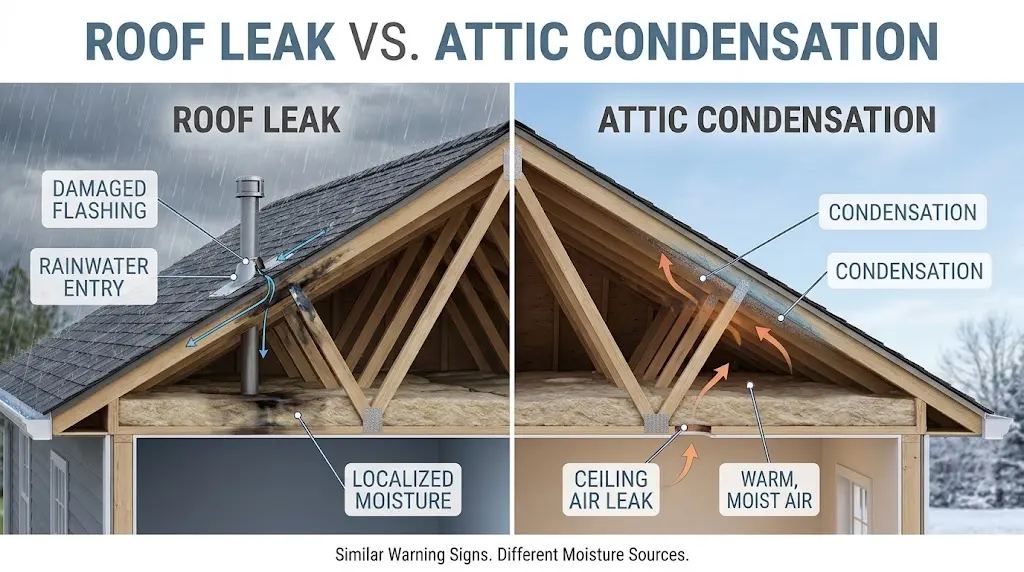
05 Attic Moisture Is Not Always a Roof Leak
An attic can provide valuable clues about hidden roofing problems.
However, discovering damp insulation, staining, or condensation does not automatically mean rainwater is entering through the roof.
Sometimes the moisture originates from inside the home.
Warm, humid indoor air can escape through ceiling openings and enter colder attic spaces.
When that air contacts sufficiently cold surfaces, condensation or frost may develop.
Signs That May Indicate a Roof Leak
Localized wet insulation beneath a roof penetration
Water trails connected to roof decking or flashing
Moisture appearing after rainfall
Staining concentrated near one vulnerable roof connection
Signs That May Indicate Attic Condensation
Widespread frost on cold roof decking
Moisture associated with indoor humidity
Condensation near air-leakage pathways
Dampness recurring during cold weather even without rainfall
These patterns are clues, not definitive diagnoses.
The U.S. Department of Energy’s guidance on air sealing around plumbing and vent penetrations explains how warm, moisture-laden air can enter attics through gaps and create condensation concerns.
Why Does the Difference Matter?
A leaking roof flashing detail may need roofing repairs.
Attic condensation, on the other hand, may require evaluation of air sealing, insulation, humidity sources, or the ventilation strategy.
Applying roof sealant will not necessarily correct condensation originating from indoor air.
Identifying the actual source prevents unnecessary work and supports a more effective solution.
06 Look for Early Interior Warning Signs Before Winter
A hidden roof leak may first become noticeable inside the home.
Homeowners should pay particular attention to upper-floor ceilings, attic spaces, chimney walls, and areas near roof penetrations.
Common Interior Warning Signs
Brown or yellow ceiling stains
Discoloration can indicate previous or ongoing moisture exposure.
Bubbling or peeling paint
Moisture behind a painted surface may weaken adhesion.
Damp drywall
Soft, wet, or discolored drywall may suggest active moisture intrusion.
Musty odors
Persistent odors can signal damp materials, although additional investigation is required to determine their source.
Stained attic framing
Dark or irregular marks may indicate a history of moisture exposure.
Damp insulation
Water-soaked insulation may lose some insulating performance and deserves evaluation.
Why Should You Investigate a Small Ceiling Stain?
A small stain is not proof of extensive roof damage.
However, it should not automatically be dismissed as cosmetic.
Water can remain concealed within insulation, wood, or wall cavities before the damage becomes obvious.
The U.S. Environmental Protection Agency’s guide to mold and moisture recommends correcting water problems and drying affected materials promptly, ideally within 24–48 hours, to reduce the likelihood of mold growth.
Homeowners should identify and correct the moisture source before repainting or replacing interior finishes.
07 Why Existing Leaks Can Become More Difficult During Minnesota Winter
Minnesota winter introduces snow accumulation, freezing temperatures, and changing roof conditions.
If a roof already has vulnerable openings, precipitation and snowmelt may continue to expose those areas to moisture.
Winter Conditions That Can Complicate Existing Leaks
Snow covering damaged areas
A missing shingle or flashing defect may become harder to observe beneath snow.
Limited roof access
Icy surfaces increase the danger of rooftop inspection or repair.
Melting and refreezing moisture
Water may enter existing openings during thaw periods and freeze again under suitable conditions.
Ice dam-related water backup
Meltwater trapped behind an ice dam may enter vulnerable parts of a roofing system.
Do Clogged Gutters Cause Ice Dams?
Not directly.
Clogged gutters can interfere with drainage, but most roof ice dams result from snow melting on warmer portions of the roof and refreezing near colder eaves.
The University of Minnesota Extension’s ice dam prevention guide explains how heat loss, snow cover, and uneven roof temperatures contribute to the problem.
Homeowners who experienced recurring ice dam leaks may also benefit from Bold North Roofing’s Minnesota Ice Dam Prevention Guide.
A fall roofing evaluation is especially helpful when previous winter leaks have never been fully diagnosed.
08 What Should Richfield Homeowners Do After Finding a Possible Roof Leak?
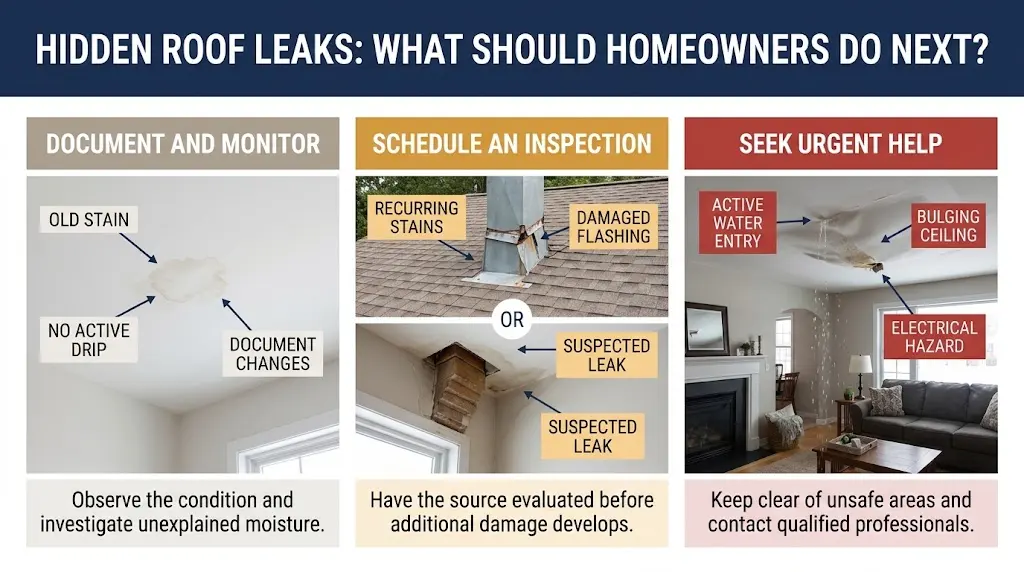
If you suspect a roof leak, start by documenting what you can observe safely.
Avoid walking on wet or damaged roofing surfaces.
Step 1: Document the Warning Signs
Take photographs of ceiling stains, damaged interior finishes, or visible exterior roofing concerns.
Record whether the symptoms appear after rainfall, snowmelt, or periods of high indoor humidity.
Step 2: Protect the Interior
If water is actively entering the home, move furniture and belongings away from the affected area when safe.
Use suitable containers to collect drips if doing so does not create an electrical hazard.
Step 3: Be Careful Around Electricity
Do not touch wet lighting fixtures, exposed wiring, or electrical equipment.
If water is near electrical components, keep clear of the area and contact a qualified professional. Only disconnect power if it can be done safely from a dry, unaffected location.
Step 4: Avoid Temporary Repairs That Hide the Problem
Applying paint, caulk, or other products without diagnosing the water-entry point may conceal symptoms rather than resolve the issue.
Proper repair depends on identifying the defective roofing or building component.
Step 5: Arrange a Professional Evaluation
A roofing contractor can inspect relevant exterior areas and accessible interior spaces to help determine where moisture is entering.
Bold North Roofing provides additional advice in its Roof Leak Emergency Guide for Minnesota Homeowners.
If there is major ceiling deformation, structural concern, or an unsafe electrical condition, avoid the affected area and seek urgent professional assistance.
09 When Is a Professional Roof Inspection Worth Scheduling?
Not every minor stain requires roof replacement, but persistent or unexplained moisture deserves attention.
A professional evaluation may be appropriate when:
Ceiling stains return after rainfall
Flashing looks loose or damaged
Multiple shingles are missing
Attic insulation is repeatedly wet
Leaks occur near chimney or skylight connections
Water appears after snowmelt
Previous repairs have not resolved the problem
Storm damage may have affected the roof
What Happens During a Roof Inspection?
Depending on the property and inspection scope, a roofing professional may evaluate:
Exterior roofing materials: Shingles, flashing, vents, valleys, and roof edges.
Interior spaces: Accessible attic framing, insulation, and visible ceiling stains.
Drainage conditions: Gutters, downspouts, and areas where water may collect.
Storm-related concerns: Evidence of wind, hail, or other weather damage.
Repair options: Whether the problem appears localized or part of broader roof deterioration.
Bold North Roofing explains this process in What Happens During a Professional Roof Inspection?.
For hail or wind damage, Bold North Roofing offers free storm-damage inspections. General preventive inspections may have different terms, so homeowners should confirm the scope when scheduling.
10 Can Hidden Roof Leaks Be Repaired Without Replacing the Entire Roof?
Yes. Many roofing leaks originate from localized defects that may be repairable.
However, the appropriate solution depends on the roof’s condition and the extent of any concealed damage.
When Localized Roof Repair May Be Appropriate
A small area of chimney flashing is defective.
A plumbing vent boot has deteriorated.
A limited section of shingles is damaged.
A specific water-entry point has been identified.
The remaining roofing materials are in good condition.
When Roof Replacement May Be Worth Considering
Leaks repeatedly return after proper repairs.
Several areas show widespread deterioration.
Roofing materials are near the end of their useful life.
Storm damage affects multiple roof sections.
Underlying decking requires extensive replacement.
The age of the roof alone does not determine whether replacement is necessary.
For Richfield homeowners, the best starting point is an evaluation of the actual roofing system.
Explore roof repair and replacement services in Richfield, MN to learn more about the options available through Bold North Roofing & Contracting.
11 A Fall Hidden Roof Leak Checklist for Richfield Homeowners
Homeowners can use the following checklist to identify potential roofing concerns before Minnesota winter arrives.
Inside the Home
Check upper-floor ceilings for discoloration.
Look for bubbling or peeling paint.
Observe walls near chimneys and skylights.
Check for recurring moisture after rainfall.
Note unusual odors in upper rooms.
Inside an Accessible Attic
Look for localized damp insulation.
Check visible wood framing for stains.
Observe moisture near roof penetrations.
Note areas where condensation or frost may develop.
Do not disturb unsafe electrical systems or suspected hazardous materials.
Outside the Home
Look for missing or lifted shingles from the ground.
Observe visible chimney flashing.
Check roof valleys for heavy debris accumulation.
Watch for overflowing gutters during rainfall.
Look for water staining along fascia boards and soffits.
Before Winter
Document existing moisture concerns.
Address confirmed active leaks promptly.
Arrange professional inspection where needed.
Review recurring ice dam problems.
Keep gutters and downspouts functioning properly.
Safety Reminder: Ground-level observations and safely accessible indoor checks are the preferred approach for homeowners. Do not climb onto steep, wet, frosted, or damaged roofs.
Hidden Roof Leak Concerns in Richfield and Nearby Twin Cities Communities
Richfield properties include a variety of home designs and roofing assemblies, from modest single-story houses to larger residential properties with chimneys, multiple roof slopes, and attached garages.
The condition of each roofing system depends on its age, materials, installation, previous repairs, and weather exposure.
These leak-detection considerations are relevant to homeowners in Richfield and surrounding communities, including:
Richfield, MN
Minneapolis, MN
Bloomington, MN
Edina, MN
St. Louis Park, MN
Golden Valley, MN
Hopkins, MN
Burnsville, MN
Eagan, MN
Eden Prairie, MN
A home with a masonry chimney may require additional attention around flashing and mortar joints, while another property may have concerns involving aging vent boots or complex roof valleys.
There is no single leak source common to every Richfield home.
The most reliable approach is to evaluate the roofing system and investigate actual moisture symptoms rather than guessing.
The Neighborhood Roof Signal Framework
When a neighbor replaces their roof, it doesn’t automatically mean your home needs a new one. However, nearby roof replacements can be a useful reminder to evaluate your own roof, especially after hailstorms, strong winds, or severe weather.
Here’s a simple four-step framework to help homeowners make informed roofing decisions:
Notice:
Pay Attention to Nearby Roof Work
Notice when several homes in your neighborhood receive roof repairs or replacements, particularly after major storms. This may indicate shared exposure to damaging weather conditions.
Compare:
Evaluate Your Roof’s Risk Factors
Compare your roof’s age, materials, condition, tree coverage, and exposure to recent storms. Neighboring homes may experience the same weather but have different roofing needs.
Check:
Look for Visible Warning Signs
Check for missing or lifted shingles, excessive granule loss, dented gutters, and signs of moisture. A ground-level inspection can help identify potential roofing concerns.
Decide:
Schedule a Professional Roof Inspection
If you notice damage or share similar risk factors with nearby homes, consider a professional inspection. A roofing expert can determine whether maintenance, repairs, or replacement may be necessary.
Key Takeaway: A neighbor’s roof replacement is a reason to pay attention, not proof that your roof needs replacing. Evaluate your home’s condition before making a roofing decision.

Bold North Roofing: A Local Inspection Can Give You a Clear Answer
At Bold North Roofing, the goal is to help homeowners understand what their roof actually needs. If your neighbor just replaced their roof, that does not mean you automatically need one too. But it may mean your home is worth checking, especially if it shares the same storm history, roof age, or neighborhood conditions.
A roof inspection can help identify whether your roof has storm damage, aging shingles, flashing concerns, gutter issues, attic moisture, or other warning signs. Homeowners can also meet the team or review financing options if larger roof work becomes part of the conversation.
The most important thing is getting a clear answer before assuming the worst. A roof may only need maintenance or a small repair. In other cases, replacement planning may make sense. The inspection helps separate guesswork from actual roof condition.
Frequently Asked Questions About Hidden Roof Leaks in Richfield MN
- What are the first signs of hidden roof leaks in Richfield MN?
Early warning signs can include ceiling stains, damp attic insulation, peeling paint, musty odors, moisture near roof penetrations, and recurring water marks after rainfall. These symptoms may have other causes, so accurate diagnosis is important.
- Why is fall a good time to inspect a roof for leaks?
Fall provides an opportunity to evaluate visible roofing materials before snow covers them. Seasonal rainfall may also reveal existing weak points, while roof access is generally less complicated before ice accumulates.
- Can a roof leak even if the shingles look fine?
Yes. Water may enter through defective flashing, deteriorated pipe boots, skylight connections, roof valleys, or other vulnerable areas even when most shingles appear intact.
- Does a ceiling stain always mean the roof is leaking?
No. Ceiling stains may result from roofing problems, plumbing leaks, condensation, or other moisture sources. A professional evaluation can help identify the actual cause.
- Can attic condensation look like a roof leak?
Yes. Moisture from indoor air can condense on cold attic surfaces and create staining or wet insulation. Roof leaks and condensation can produce similar symptoms but require different corrective measures.
- Will a small roof leak get worse during winter?
Not always, but an unresolved opening can remain exposed to rain, melting snow, and moisture. Winter conditions can also make inspection and repair more difficult, so confirmed leaks should be addressed promptly.
- Can hidden roof leaks be fixed without a full replacement?
Often, yes. Localized flashing, vent, or shingle defects may be repairable. Replacement becomes more likely when damage is widespread, roofing materials are extensively deteriorated, or repairs have repeatedly failed.
- Does Bold North Roofing provide roofing services in Richfield, MN?
Yes. Bold North Roofing & Contracting has a dedicated Richfield roofing service page and provides residential roofing evaluations, repairs, and replacements.
Conclusion: Find Hidden Roof Leaks Before Minnesota Winter Arrives
Identifying hidden roof leaks in Richfield MN during fall gives homeowners an opportunity to investigate moisture problems before winter conditions complicate the process.
Leaks do not always appear as obvious dripping water. Ceiling stains, wet insulation, deteriorated flashing, and recurring moisture may provide early clues about problems that deserve attention.
At the same time, not every moisture concern originates from the roof. Attic condensation, plumbing, and other sources should also be considered.
The goal is to identify the actual cause, address confirmed defects, and avoid unnecessary roofing work.
Concerned about a possible hidden roof leak in your Richfield home?
Explore Bold North Roofing & Contracting’s Richfield roofing services, request a roof inspection, or contact the team to discuss your roofing concerns before winter.