
Edina fall roof maintenance is an important part of preparing a home for Minnesota’s colder months. After a season of heavy rain, summer storms, wind, and falling leaves, homeowners may notice signs of wear that deserve attention before freezing temperatures and winter precipitation arrive.
Edina homes vary in age, roofing materials, and architectural design. Some properties have broad asphalt shingle roof slopes, while others feature multiple gables, dormers, chimneys, skylights, and roof valleys. Each design has areas where water must drain correctly and protective roofing components must remain secure.
A roof may look fine from the driveway while still having small flashing gaps, aging pipe boots, clogged drainage areas, or moisture concerns in the attic.
Fortunately, not every roofing problem requires major repairs. A practical fall maintenance routine can help homeowners recognize warning signs, prioritize necessary work, and avoid overlooking problems before winter.
In this guide, Bold North Roofing & Contracting explains what Edina homeowners should check, why certain roof areas need attention, and when a professional roof inspection in Minnesota may be appropriate.
What Should Edina Homeowners Check on Their Roof This Fall?
Before temperatures drop, Edina homeowners should examine visible roofing materials, roof drainage, exterior flashing, and accessible attic areas for signs of damage or moisture.
An Edina fall roof maintenance checklist should include:
Missing, cracked, lifted, or curling asphalt shingles
Heavy leaf buildup in gutters and roof valleys
Loose flashing around chimneys and dormers
Aging seals around plumbing vents and skylights
Blocked or poorly draining downspouts
Water stains near roof edges and exterior walls
Damp attic insulation or roof decking
Overhanging branches and storm debris
Previous roof leaks or ice dam concerns
Visible signs of roof deterioration after summer storms
Homeowners can check many of these conditions from the ground or safely accessible interior spaces.
Roof access, repairs, and elevated inspections should be left to qualified professionals.
Why Fall Roof Maintenance Matters in Edina, Minnesota
Minnesota’s changing seasons expose roofs to different weather conditions throughout the year.
Warm summer temperatures, thunderstorms, and strong winds may affect shingles and roof accessories. Fall brings leaves, moisture, and colder nights. Winter introduces snow, freezing temperatures, and periods of melting and refreezing.
Existing roofing weaknesses can become harder to identify once the roof is covered with snow.
Why Should Edina Homeowners Inspect Their Roof Before Winter?
Fall roof maintenance provides several advantages.
Better visibility: Roofing materials, flashing, and drainage areas are easier to observe before snow accumulation.
Earlier identification of leaks: Existing moisture problems can be investigated before additional winter precipitation.
Improved drainage: Gutters and roof valleys can be cleared of leaves and other seasonal debris.
Repair planning: Homeowners have an opportunity to evaluate roofing concerns before icy conditions complicate roof access.
Peace of mind: A professional assessment can help distinguish ordinary wear from issues requiring attention.
Bold North Roofing also explains the benefits of early seasonal inspections in its article, Why Fall Is the Best Time for a Roof Inspection.
The purpose of maintenance is not to replace an otherwise functional roof. It is to recognize problems early and choose appropriate solutions.
01 Inspect Asphalt Shingles for Wear and Storm Damage
Asphalt shingles are commonly used on homes throughout Edina and the surrounding Twin Cities.
These materials are designed to protect the roofing system against normal weather exposure, but aging, storms, and installation issues may affect their performance.
What Shingle Warning Signs Should You Look For?
Missing shingles
A missing shingle may leave underlying protective materials more exposed to rain and melting snow.
Lifted edges
Wind damage or weakened adhesive seals may cause shingle tabs to rise from the roof surface.
Cracked shingles
Older roofing materials may show cracks associated with weathering and loss of flexibility.
Curling shingles
Raised or curled edges may indicate that shingles are nearing the end of their useful service life.
Unusual granule loss
Large amounts of protective granules collecting near gutters may deserve evaluation, although some granule shedding occurs naturally.
Why Check Shingles Before Temperatures Drop?
Existing shingle damage can create vulnerable areas where moisture may enter.
When cold weather arrives, repeated wetting and freezing may contribute to deterioration in already weakened materials or connections.
However, low temperatures alone do not automatically damage properly installed shingles.
If your Edina home experienced significant wind or hail, a professional inspection may help identify storm-related concerns that are difficult to see from the ground.
02 Check Roof Valleys for Trapped Leaves and Debris
Roof valleys form where two sloping roof sections meet.
They are important drainage areas because water from adjoining roof slopes moves toward the valley before reaching the gutters.
Homes with multiple gables or dormers may have several roof valleys that require attention.
During fall, leaves and twigs may collect where roof slopes intersect.
Warning Signs in Roof Valleys
Wet leaves packed against shingles
Twigs blocking drainage paths
Debris covering visible valley flashing
Dark staining near roof intersections
Areas that remain damp after surrounding sections dry
Previous leaks associated with heavy rainfall
A few scattered leaves usually do not create an immediate problem.
The greater concern is persistent debris accumulation that restricts drainage, retains moisture, or conceals damaged roofing materials.
Homeowner tip: Do not climb onto a steep or damp roof to remove valley debris. Contact a qualified professional when cleaning requires roof access.
03 Examine Flashing Around Chimneys, Dormers, and Roof Connections
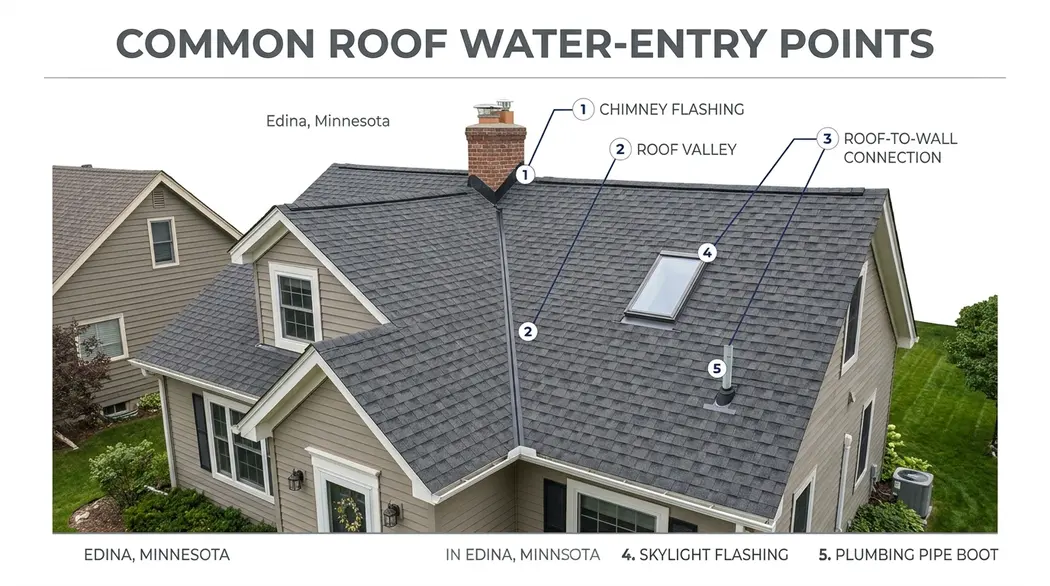
Roof flashing helps direct water away from vulnerable locations where roofing materials meet walls, chimneys, skylights, and other structural elements.
For Edina homes with complex rooflines, these connections deserve particular attention.
Even if the main shingle surface remains in good condition, damaged flashing may allow moisture to enter the roofing system.
Important Flashing Areas to Check
Chimney flashing
Look for visible separation, deteriorating sealant, corrosion, or staining near brick chimneys.
Roof-to-wall flashing
Check areas where roof slopes connect with vertical siding, dormer walls, or other exterior structures.
Skylight flashing
Watch for moisture stains, damaged seals, and visible deterioration around skylight connections.
Valley flashing
Check for exposed metal damage, debris accumulation, or signs of recurring moisture.
Plumbing vent flashing
Look for aging rubber boots or gaps where plumbing pipes penetrate the roof.
Why Flashing Problems Matter Before Winter
When snow melts, water follows roof slopes and reaches the same vulnerable connections that handle ordinary rainfall.
A loose flashing detail or deteriorated seal may allow that moisture to enter the roof assembly.
The location of interior moisture may not directly match the point where water entered, making accurate diagnosis important.
Professional inspection can help determine whether flashing requires localized repair or more extensive work.
04 Clean Gutters and Inspect Downspouts Before Freezing Weather
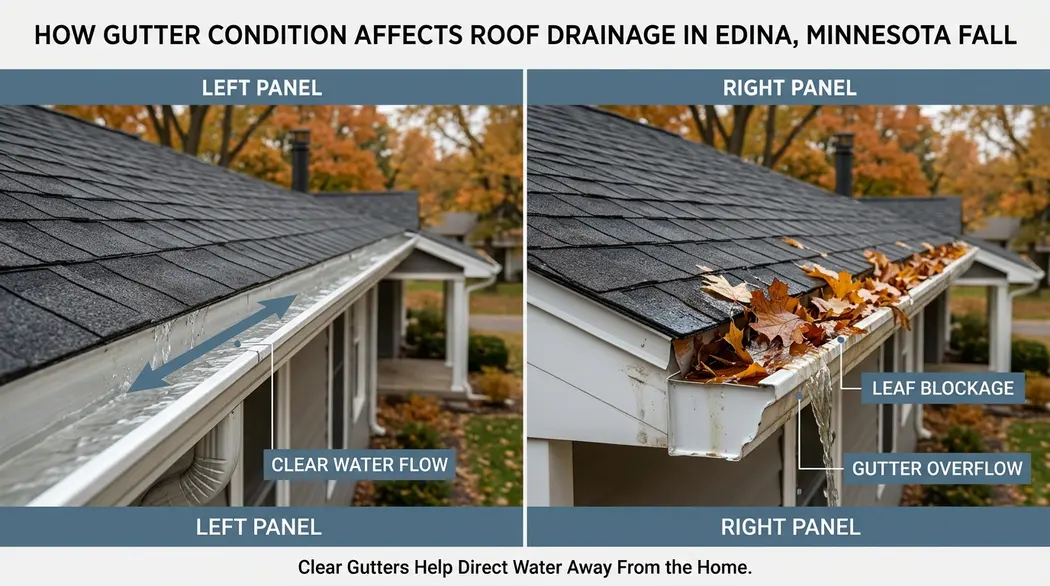
Many Edina residential properties have mature trees that can contribute to significant fall leaf accumulation.
Maple leaves, oak leaves, pine needles, and small branches may collect along roof edges and inside gutter channels.
As rainwater moves across the roof, debris can be carried toward downspout openings.
Signs Your Gutters Need Attention
Leaves extending above the gutter edge
Water overflowing during rainfall
Downspouts draining slowly
Standing water remaining after rain
Sagging or loose gutter sections
Moisture staining on fascia boards
Water pooling near the foundation
When wet debris restricts drainage, water can remain in the gutter and eventually freeze as temperatures fall.
The additional weight of frozen water and debris may place stress on weakened gutter attachments.
Do Clogged Gutters Cause Ice Dams?
Clogged gutters can create drainage problems, but they are not the primary cause of roof ice dams.
Ice dams usually develop when snow melts on warmer roof sections and refreezes near colder eaves.
The University of Minnesota Extension explains how snow cover, heat loss, and uneven roof temperatures contribute to ice dam formation.
Cleaning gutters supports proper drainage, while long-term ice dam prevention often requires attention to attic air sealing and insulation.
For additional seasonal guidance, see the University of Minnesota’s homeowner preparedness checklists.
05 Check Plumbing Vents, Exhaust Vents, and Other Roof Penetrations
Roof penetrations are necessary for residential plumbing and ventilation systems.
However, each opening must be properly protected to prevent water intrusion.
Plumbing vent pipes commonly use flashing and rubber boots. Other roof-mounted components may have different manufacturer-specified weatherproofing details.
What Should Homeowners Watch For?
Cracked rubber pipe boots
Loose metal flashing
Damaged or displaced vent covers
Deteriorated sealant
Gaps around pipe penetrations
Recurring moisture near roof openings
Over time, ultraviolet exposure, age, and weather can affect these components.
Small, localized defects may sometimes be corrected without replacing the entire roofing system.
A professional should evaluate damaged penetrations rather than relying on temporary surface sealant as a permanent repair.
06 Look for Attic Moisture and Insulation Concerns
Fall roof maintenance should include the attic when it is safely accessible.
The attic can reveal moisture problems that are not visible from the exterior.
Attic Warning Signs
Damp or compressed insulation
Dark stains on roof decking
Rusted fasteners
Condensation on cold surfaces
Persistent musty odors
Unexplained moisture near chimneys or vents
Not every attic moisture problem is caused by a leaking roof.
Warm, humid indoor air may escape through gaps in the ceiling and reach cold attic surfaces, where condensation or frost can develop.
Why Attic Air Sealing Matters in Minnesota
When excessive indoor heat reaches the roof deck during snowy weather, it may contribute to uneven roof temperatures.
This can increase the conditions that allow ice dams to develop.
The Minnesota Department of Commerce identifies attic air leakage as a major contributing factor to ice dam formation.
Appropriate air sealing and insulation improvements can help address underlying heat-loss problems.
However, homeowners should avoid making significant changes to attic ventilation or insulation without considering the design of the roof assembly.
A professional home energy assessment may be appropriate when recurring attic moisture or ice dam problems are present.
07 Examine Overhanging Trees and Storm Debris
Mature trees can be an attractive feature of Edina neighborhoods, but branches and seasonal debris can also affect roof maintenance needs.
Branches hanging close to the roof may rub against shingles during windy weather.
Smaller limbs and leaves may accumulate in valleys and gutters, while larger branches may create risks during winter storms.
Tree-Related Warning Signs
Branches touching roof surfaces
Heavy limbs hanging over the house
Twigs trapped in roof valleys
Leaves blocking gutters
Storm-damaged branches near the roof
Excessive debris around chimneys and roof transitions
Some debris can be removed safely from the ground by qualified maintenance professionals.
Larger or elevated branches should be handled by trained tree-care specialists.
Never attempt to trim branches near overhead power lines.
08 Watch for Interior Signs of Roof Leaks
Roofing problems may become visible indoors before homeowners recognize exterior damage.
Water can enter through damaged roofing materials and travel along framing, insulation, or other surfaces before reaching a ceiling.
Interior Signs to Investigate
Brown or yellow ceiling stains
Discoloration may indicate previous or ongoing moisture exposure.
Peeling paint
Moisture behind finished surfaces can cause paint to bubble or peel.
Damp drywall
Soft or wet drywall may indicate an active moisture problem.
Musty odors
Recurring odors can suggest moisture accumulation inside enclosed spaces.
Water stains near chimneys
These may result from roof flashing problems, masonry deterioration, or other sources.
What If You Already Have a Ceiling Stain?
Document the stain and note whether it changes after rainfall.
Do not assume the source is directly above the visible damage.
If moisture continues entering the home, arrange professional evaluation to determine the actual cause.
The goal is to correct the source rather than simply repair the visible interior finish.
09 Edina Fall Roof Maintenance: What Should You Prioritize?
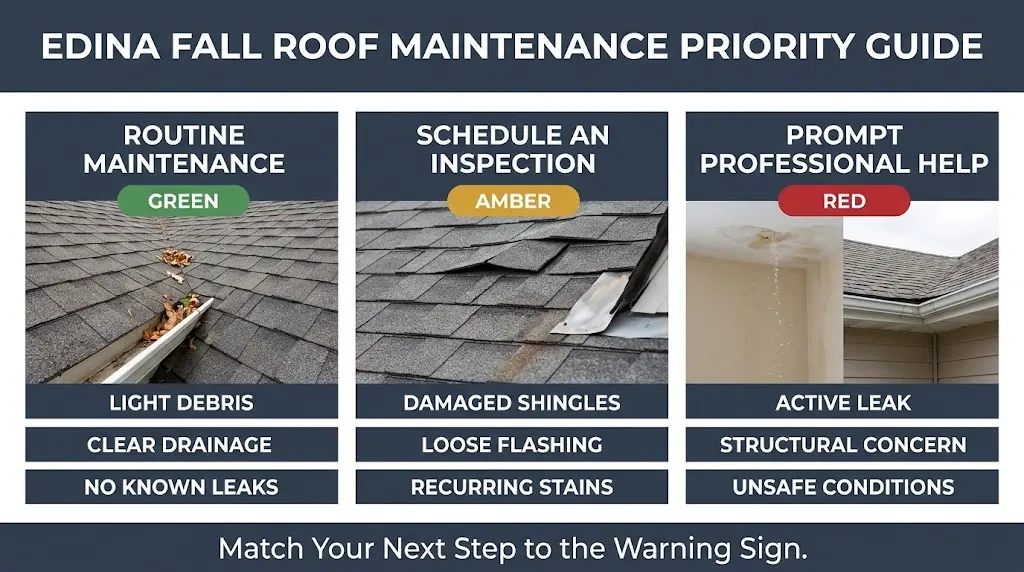
Once you have identified potential roofing concerns, it helps to distinguish routine maintenance from issues requiring professional attention.
Priority 1: Routine Maintenance
These concerns may only require seasonal maintenance:
Light leaf accumulation
Minor gutter debris
Small branches resting near roof edges
No visible shingle or flashing problems
No recurring leaks or attic moisture
Continue monitoring and keep drainage areas clear.
Priority 2: Schedule a Professional Inspection
Consider an inspection when you notice:
Several damaged or lifted shingles
Loose or deteriorating flashing
Repeated gutter overflow
Recurring ceiling stains
Unresolved storm damage
Moisture near roof penetrations
An inspection can determine whether maintenance, localized repairs, or additional investigation is appropriate.
Priority 3: Seek Prompt Professional Assistance
More urgent attention may be necessary when:
Water is actively entering the home
A roofline is newly or significantly sagging
Structural movement is suspected
Interior ceilings are deforming or showing signs of possible failure
For possible structural danger, keep people away from the affected area and contact qualified emergency or structural professionals.
10 Should You Repair or Replace Your Edina Roof Before Winter?
Finding damage during fall does not automatically mean your roof needs replacement.
A professional recommendation should consider the age of the roofing system, the extent of deterioration, the condition of underlying materials, and whether the concern is localized or widespread.
When Roof Repairs May Be Appropriate
Repairs may be suitable for:
A small number of missing shingles
Localized flashing damage
A cracked plumbing vent boot
A limited roof leak
Isolated storm-related damage
When Roof Replacement May Be Worth Considering
Replacement may be appropriate when:
Shingles show widespread deterioration
Several roof slopes have significant damage
Leaks continue despite appropriate repairs
Roofing materials are at the end of their useful life
Underlying decking requires extensive work
The best choice depends on the actual condition of the roof, not simply its age or the arrival of colder weather.
Edina homeowners can explore roof repair and replacement services in Edina, MN to learn more about available roofing solutions.
11 When Should Edina Homeowners Schedule a Roof Inspection?
A professional roof inspection can be useful when homeowners notice damage, recurring moisture, or previous storm-related concerns.
Fall can also be a practical time to evaluate roof conditions before snow and ice make exterior access more difficult.
What Happens During a Professional Roof Inspection?
Depending on the property and inspection scope, a roofing professional may evaluate:
Shingles and exposed roof surfaces
Flashing around chimneys and roof transitions
Roof vents and plumbing pipe boots
Gutters and drainage conditions
Accessible attic areas
Visible signs of storm damage
Roof decking and structural concerns where observable
Bold North Roofing explains the process in its article, What Happens During a Professional Roof Inspection?.
Bold North Roofing & Contracting offers free inspections for hail, wind, and storm damage. General preventive inspections may involve a service fee depending on the scope.
Homeowners can contact Bold North Roofing to discuss their concerns and determine what type of inspection is appropriate.
Fall Roofing Concerns in Edina and Nearby Twin Cities Communities
Roof maintenance needs vary among Edina homes and surrounding communities.
Roof design, property age, tree coverage, past storm exposure, and maintenance history all influence what homeowners should check.
These fall maintenance considerations are relevant to properties in:
Edina, MN
Minneapolis, MN
St. Louis Park, MN
Richfield, MN
Bloomington, MN
Eden Prairie, MN
Minnetonka, MN
Golden Valley, MN
Hopkins, MN
Burnsville, MN
For example, a home surrounded by mature trees may need additional gutter maintenance, while a property with dormers and multiple roof transitions may require closer inspection of flashing.
Homes with previous ice dam problems may benefit from an attic air-sealing and insulation assessment.
Each property should be evaluated according to its actual conditions rather than relying on a single maintenance solution.
The Neighborhood Roof Signal Framework
When a neighbor replaces their roof, it doesn’t automatically mean your home needs a new one. However, nearby roof replacements can be a useful reminder to evaluate your own roof, especially after hailstorms, strong winds, or severe weather.
Here’s a simple four-step framework to help homeowners make informed roofing decisions:
Notice:
Pay Attention to Nearby Roof Work
Notice when several homes in your neighborhood receive roof repairs or replacements, particularly after major storms. This may indicate shared exposure to damaging weather conditions.
Compare:
Evaluate Your Roof’s Risk Factors
Compare your roof’s age, materials, condition, tree coverage, and exposure to recent storms. Neighboring homes may experience the same weather but have different roofing needs.
Check:
Look for Visible Warning Signs
Check for missing or lifted shingles, excessive granule loss, dented gutters, and signs of moisture. A ground-level inspection can help identify potential roofing concerns.
Decide:
Schedule a Professional Roof Inspection
If you notice damage or share similar risk factors with nearby homes, consider a professional inspection. A roofing expert can determine whether maintenance, repairs, or replacement may be necessary.
Key Takeaway: A neighbor’s roof replacement is a reason to pay attention, not proof that your roof needs replacing. Evaluate your home’s condition before making a roofing decision.
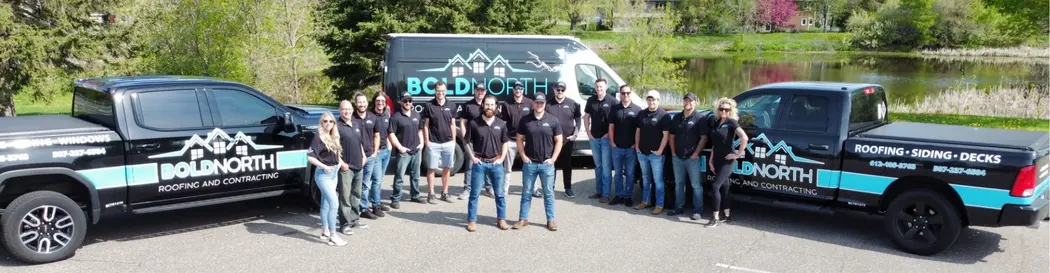
Bold North Roofing: A Local Inspection Can Give You a Clear Answer
At Bold North Roofing, the goal is to help homeowners understand what their roof actually needs. If your neighbor just replaced their roof, that does not mean you automatically need one too. But it may mean your home is worth checking, especially if it shares the same storm history, roof age, or neighborhood conditions.
A roof inspection can help identify whether your roof has storm damage, aging shingles, flashing concerns, gutter issues, attic moisture, or other warning signs. Homeowners can also meet the team or review financing options if larger roof work becomes part of the conversation.
The most important thing is getting a clear answer before assuming the worst. A roof may only need maintenance or a small repair. In other cases, replacement planning may make sense. The inspection helps separate guesswork from actual roof condition.
Frequently Asked Questions About Edina Fall Roof Maintenance
- When should homeowners schedule fall roof maintenance in Edina, MN?
Fall is a practical time to check roofing materials, gutters, flashing, and attic conditions before snow and freezing weather complicate access. Visible damage or active leaks should be addressed promptly rather than waiting for a particular date.
- What are the most important things to check before winter?
Homeowners should look for missing or lifted shingles, loose flashing, clogged gutters, blocked roof valleys, deteriorating pipe boots, attic moisture, and unexplained ceiling stains.
- Can falling leaves damage an Edina roof?
A few leaves generally do not damage roofing materials. However, large amounts of wet debris can restrict drainage, hold moisture near roof valleys, and hide existing roofing problems.
- Does every damaged shingle require roof replacement?
No. Localized shingle damage may be repairable when the remaining roofing system is in good condition. Replacement may be considered when deterioration is widespread or the roof has reached the end of its useful life.
- Do clogged gutters cause ice dams?
Clogged gutters can create drainage problems and frozen water buildup, but ice dams are primarily associated with uneven roof temperatures, snow cover, and unwanted heat loss from the home.
- How can homeowners check for roof leaks without climbing onto the roof?
Look for ceiling stains, damp attic insulation, moisture marks near chimneys, peeling paint, and recurring leaks after rainfall. A professional inspection may be necessary to identify the exact water-entry point.
- When should I call a roofing contractor in Edina?
Consider professional help if you notice missing shingles, damaged flashing, repeated gutter overflow, recurring leaks, suspected storm damage, or other visible roofing concerns.
- Does Bold North Roofing serve Edina, Minnesota?
Yes. Bold North Roofing & Contracting provides residential roofing services in Edina and surrounding Twin Cities communities, including roof inspections, repairs, and replacements.
Conclusion: Prepare Your Edina Roof Before Temperatures Drop
Edina fall roof maintenance helps homeowners identify roofing problems before cold temperatures, snow, and freezing conditions make inspections more difficult.
Checking shingles, gutters, flashing, roof valleys, attic moisture, and nearby trees can reveal concerns that may otherwise remain unnoticed until winter.
Not every roofing issue requires a major project. Many concerns can be addressed through seasonal cleaning, localized repairs, or additional inspection.
The most effective approach is to understand your roof’s condition and address meaningful problems before they become harder to manage.
Want to know if your Edina roof is ready for winter?
Explore Bold North Roofing & Contracting’s Edina roofing services or contact the team to discuss a professional roof inspection.
You can also call (612) 200-3881 to get started.